EN
 AR
 CS
 DA
 NL
 FI
 FR
 DE
 EL
 HI
 IT
 JA
 KO
 NO
 PL
 PT
 RU
 ES
 SV
 ID
 SK
 SL
 ET
 TH
 TR
 MS
 KA
 UR
 BN
 MN

Why Are More Hotels Adopting RFID Wristbands for Guest Room Access?
For a hotel, the moment between a guest arriving at a room door and getting inside should be uneventful. A card that is demagnetized, misplaced, or buried in a beach bag turns that small moment into a front-desk interruption. That is one reason hotel wristbands for access control are moving from a resort novelty to a practical credential choice for properties with pools, spas, family programs, or all-inclusive operations.
The appeal is not that a wristband is automatically better than a key card. It is that it can put a credential where guests are least likely to lose it while giving the property a controlled way to issue, change, and retire permissions. When the access system and credential specification are matched properly, RFID hotel wristbands can support a simpler guest journey without weakening day-to-day access discipline.
A wearable credential removes a recurring guest friction point
Guests commonly need a room key at exactly the times they do not want to carry a wallet: at the pool, in a fitness area, on a family activity, or while moving between a room and a resort amenity. With hotel wristbands for access control, the room credential is worn rather than stored in a pocket or phone case. The guest presents the band near a compatible reader; the reader checks the assigned permission and responds according to the hotel’s access rules.
The interaction is simple, but it can matter in a busy property. A single RFID credential can be configured to cover a guest room and selected shared spaces, such as a pool gate, lounge, parking entry, or locker area, where the hotel’s systems are set up for those permissions. Rather than promising a universal “all access” experience, the useful question is which doors and amenities should be available to each guest category.
Why hotels see an operational case, not just a guest-experience upgrade
The operational value of hotel wristbands for access control comes from credential management. Front-desk teams can issue a band at check-in, set an expiration aligned with the stay, and change access when a room assignment or guest status changes. If a band is reported lost, the practical response is to disable that credential in the access system and issue a replacement according to the property’s process. The exact workflow depends on the lock platform and encoder, so compatibility should be verified before a rollout.
Wristbands can also reduce the number of separate tokens circulating around a property. That does not eliminate procedures for lost credentials or staff access, but it can make the guest-facing process more consistent. For busy resorts, consistency at the pool gate, elevator, room door, and activity desk is often more valuable than adding another standalone convenience feature.
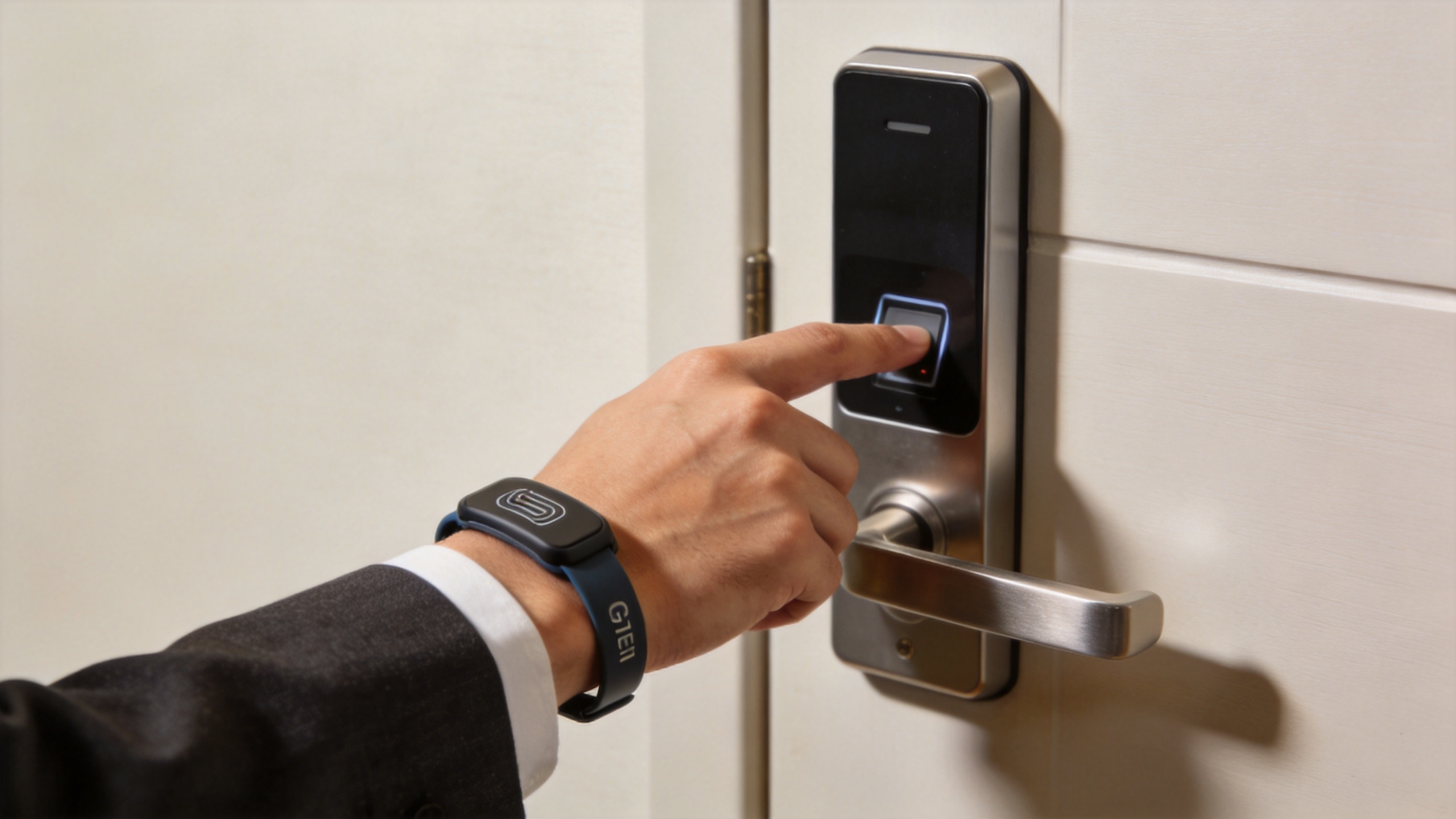
Room access can be paired with amenity permissions
RFID is useful because a credential can carry an identifier that the access platform associates with permissions. In a hotel setting, this can support tiered rules: a standard guest may open a room door and general pool entrance, while a guest with spa or club access receives additional permissions. The logic lives in the property’s configured system, not in a generic wristband alone.
That distinction matters during procurement. Ask whether the existing readers, locks, software, and encoding process support the RFID chip and credential format under consideration. A band that scans well in an event environment is not automatically appropriate for a guest-room lock ecosystem. The appropriate hotel wristbands for access control are selected around the installed system, the intended access points, and the way the hotel handles check-in, reissue, and checkout.
Reusable hotel wristbands make sense in specific operating models
Reusable hotel wristbands are especially relevant where guests repeatedly use water-adjacent or activity-heavy amenities. They can give a property a durable guest credential option, but “reusable” should be treated as an operating decision, not merely a material claim. The hotel needs a defined cleaning, inspection, collection, and re-encoding process between stays.
If a property wants guests to keep the band as a souvenir, a lower-cost one-time credential may be appropriate. If it intends to circulate bands across stays, durability, closure design, comfort, and hygiene workflow deserve closer attention. I used to assume any PVC-style band would suit a wet, multi-day environment; in practice, the fit depends on the clasp, the material construction, the use conditions, and how the property plans to recover the credential.
Security depends on controls, not on the wristband format alone
A wrist-worn credential can make casual sharing less convenient than a loose room card, particularly when a property uses a closure and issuance procedure appropriate to its security policy. Still, a wristband is not a complete security strategy. Hotels should decide how lost-band reports are handled, how quickly a credential is invalidated, whether a replacement requires identity verification, and which zones need stronger controls.
The credential technology also has to align with the reader and lock system. Chip selection, encoding format, and access-platform integration are technical decisions that should be tested on representative doors before a large order. A pilot is the sensible place to check read behavior, comfort, water exposure, printing durability, and the staff workflow for check-in and replacement.
What to evaluate before choosing hotel wristbands for access control
- System compatibility: Confirm the RFID frequency, chip type, encoding method, and reader/lock requirements with the access-control provider.
- Use environment: Consider pools, spas, beaches, heat, moisture, and how long guests will wear the credential.
- Permission design: Map room doors, elevators, gates, lockers, and paid or restricted amenities before configuring credentials.
- Replacement process: Define how staff verify identity, deactivate a lost band, and issue a new one without leaving old access active.
- Reusable workflow: For reusable hotel wristbands, plan collection, sanitation, inspection, re-encoding, and retirement criteria.
- Guest fit: Test sizing, closure comfort, readability, and the ease of presenting the band at each access point.
A measured route to adoption
Hotels are adopting hotel wristbands for access control because they can reduce a familiar point of guest friction while helping operations manage a single, configurable credential across selected parts of the property. The strongest case appears where guests spend time away from their rooms and need convenient access to multiple amenities.
There is no single wristband configuration that suits every hotel. A compact city property may prefer traditional cards, while a resort with pools, children’s programs, and controlled recreation areas may gain more from a wearable option. Start with a small pilot, validate compatibility and operational procedures, then scale only after the guest journey and the access rules work together.