EN
 AR
 CS
 DA
 NL
 FI
 FR
 DE
 EL
 HI
 IT
 JA
 KO
 NO
 PL
 PT
 RU
 ES
 SV
 ID
 SK
 SL
 ET
 TH
 TR
 MS
 KA
 UR
 BN
 MN

How RFID Wristbands Are Streamlining Entry and Payments at Water Parks
At a water park, a slow gate or a wallet left in a locker can disrupt the guest experience before the first slide. An rfid band for amusement park use turns one wearable into a ticket credential and a payment token, while the back-end system keeps the rules, balances, and permissions in one place. For operators, the goal is not simply to replace a paper ticket. It is to make movement through wet, busy spaces easier to manage without asking guests to carry cards or cash.
From an event-operations viewpoint, a wristband failure at the gate is more than an inconvenience: it can create queues, force manual checks, and make staff decisions inconsistent. A well-planned RFID deployment reduces those friction points, provided the wristband, reader infrastructure, payment platform, and operating procedures are designed to work together.
What an RFID band for amusement park use actually does
An RFID wristband contains a chip and antenna that a compatible reader can identify at close range. The wristband itself does not decide whether a guest may enter or buy a drink. It presents an identifier; the park’s management system uses that identifier to look up the ticket status, access rights, or linked spending account.
That distinction matters. A rfid band for amusement park deployment can support entry validation, re-entry rules, cabana or locker access, age-restricted zones, and a cashless purchasing workflow. Yet each function needs a deliberate rule in the software. A guest might have a valid day ticket but no payment account, for example, or have payment enabled but no permission for a premium attraction.
Why water parks need a different wristband plan
Water exposure changes the selection criteria. I used to assume any PVC wristband would hold up in a wet venue until real operating conditions made it clear that material choice, closure design, and reader compatibility all matter. A water-park wristband should be chosen for the expected wear period, water exposure, guest age range, and the way staff will issue and replace it.
If your venue has a short, indoor session, the physical demands may be modest. If it runs outdoors all day, includes pools and slides, or expects guests to wear the band through repeated water exposure, confirm the material and fastening approach with the supplier before ordering. The practical question is not whether a wristband looks durable on a sample; it is whether it remains comfortable, identifiable, and readable across the real guest journey.
How RFID speeds up entry without weakening control
1. Link the band to a specific admission record
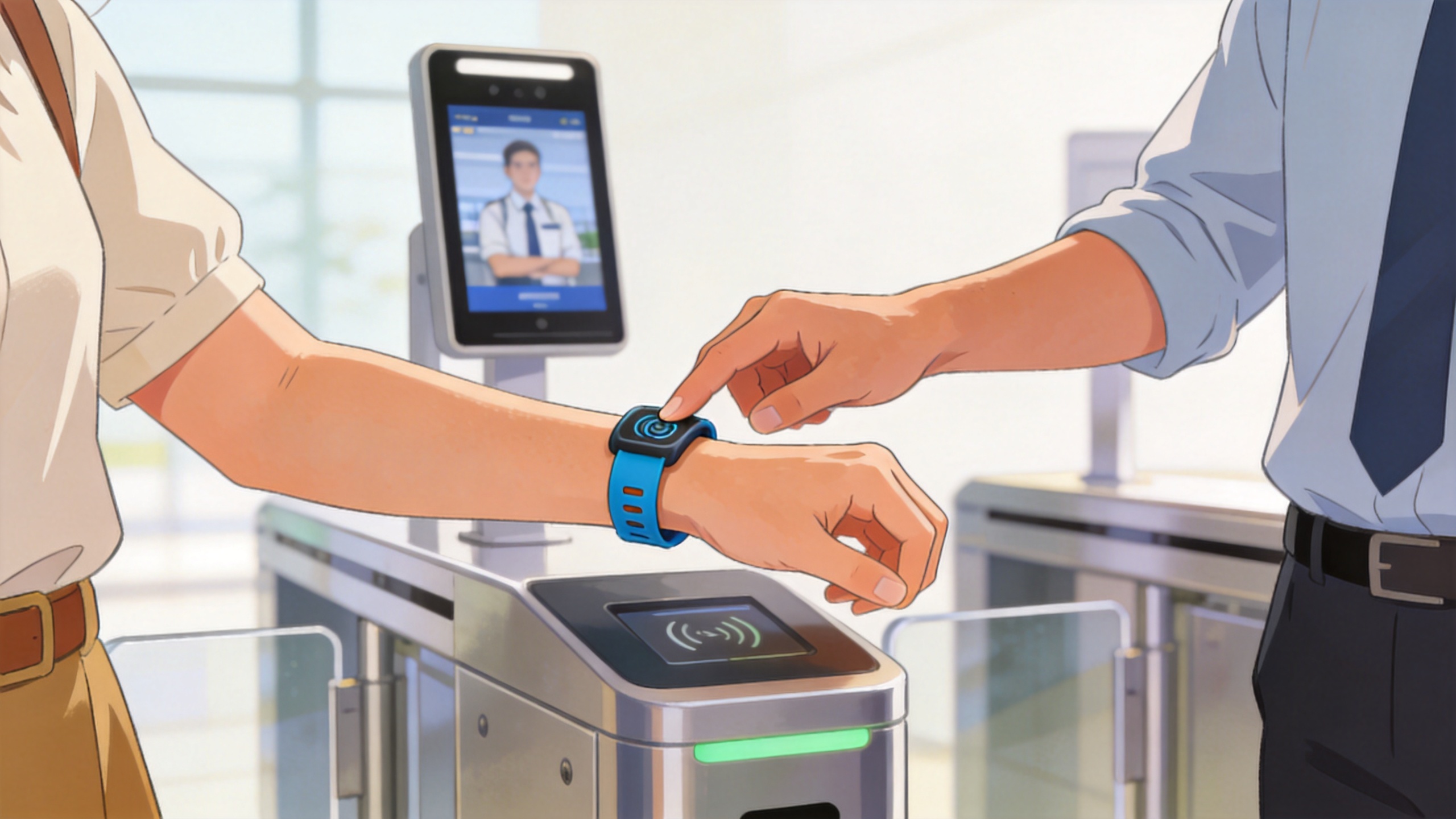
At issue, staff associate the wristband identifier with the guest’s ticket or reservation. At the gate, a reader sends that identifier to the system, which returns a simple allow, deny, or exception result. This helps staff focus on exceptions rather than visually inspecting every ticket.
2. Define re-entry and replacement rules before opening
Fast scanning only helps when the rules are clear. Decide whether a scanned band may re-enter, how a lost band is disabled, who may reissue it, and what identification is needed to protect the guest’s account. A band that can be casually transferred between guests can undermine admission controls, so the right level of tamper resistance depends on the park’s re-entry and fraud exposure.
3. Test reader placement in the actual environment
Gate throughput is affected by lane layout, network response, reader placement, and staff prompts—not the wristband alone. Run a live test with wet hands, bags, children, and the normal queue pattern. If a scan needs a second attempt, find out whether the cause is reader positioning, antenna orientation, encoding, network latency, or an unclear guest instruction.
How an RFID band for payment changes the guest journey
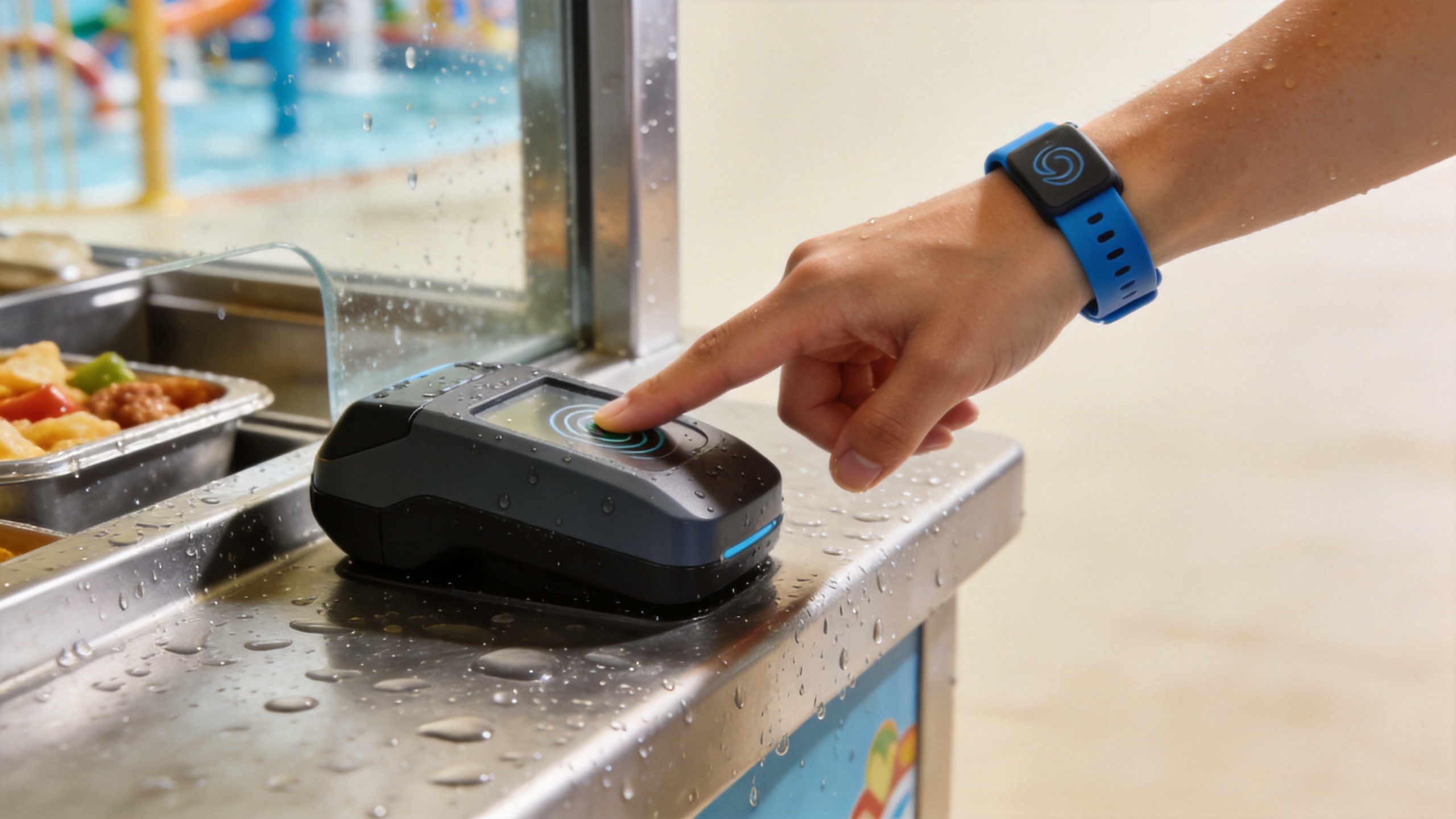
An rfid band for payment setup usually links the wristband identifier to a prepaid balance, a card on file, a room charge arrangement, or another approved account model. At a food counter or retail point, the guest taps the band, the point-of-sale system requests authorization, and the transaction is recorded against that account. The wearable acts as a convenient credential; the payment platform remains responsible for authorization, limits, refunds, and transaction records.
This is especially useful at water parks because a guest may have no dry pocket for a wallet and may not want to return to a locker between activities. A rfid band for amusement park use can reduce those interruptions when the issuance flow makes account linking clear and the payment points are trained to handle declined transactions or family-account questions quickly.
Design the workflow, not just the wristband
The strongest deployments map the guest journey before selecting a chip or material. Start with the moments that matter: arrival, wristband issue, bag check, gate scan, locker access, food and beverage purchases, ride eligibility, lost-band reporting, and exit. For each moment, define what the staff member sees, what the reader does, and what happens if the system cannot approve the request.
- Issuance: confirm the correct ticket, guest, and payment-linking consent before the band is handed over.
- Entry: show a clear scan cue and keep a staffed exception lane for unreadable bands or account questions.
- Payments: set spending limits, refund rules, and family-account permissions in advance.
- Security: deactivate lost bands promptly and require an appropriate verification process before replacement.
- Closeout: explain balance settlement, receipts, and refund procedures in language guests can understand.
So that covers the operational side. The other piece buyers often overlook is integration validation. An RFID chip protocol that is appropriate for one reader ecosystem may not be appropriate for another. Before a bulk order, confirm the reader type, encoding process, unique-ID handling, data privacy responsibilities, and the exact workflow supported by the ticketing and point-of-sale systems.
A practical rollout checklist for park operators
- Document the entry, payment, locker, and re-entry use cases separately.
- Verify that the chosen wristband and chip are compatible with existing readers and software.
- Choose a water-suitable material and fastening method for the planned operating conditions.
- Decide how guests fund or link accounts and how spending limits are managed.
- Test enrollment, scanning, payment approval, lost-band deactivation, and refunds before launch.
- Train staff on exception handling rather than relying on the wristband to solve every issue automatically.
- Review scan failures and transaction exceptions after opening, then adjust lanes, prompts, or processes.
Choosing the right RFID wristband approach
There is no single universal rfid band for amusement park use. The right choice depends on the park’s reader infrastructure, exposure to water, admission model, payment workflow, expected guest volume, and loss-replacement policy. If cashless convenience is the priority, make the account-linking and support flow as visible as the tap itself. If access integrity is the primary concern, focus on secure issuance, replacement controls, and the physical transferability of the band.
In practice, the wristbands that create the fewest guest complaints are not necessarily the ones with the longest feature list. They are the ones that fit comfortably, scan consistently in the installed environment, and connect to procedures staff can execute confidently. When those pieces align, RFID can make entry and spending feel simpler for guests while giving water-park teams a clearer, more manageable operating flow.