EN
 AR
 CS
 DA
 NL
 FI
 FR
 DE
 EL
 HI
 IT
 JA
 KO
 NO
 PL
 PT
 RU
 ES
 SV
 ID
 SK
 SL
 ET
 TH
 TR
 MS
 KA
 UR
 BN
 MN

Why RFID Wood Wristband Fit Low-Carbon Themed Resort and Eco Park Application Scenarios
A low-carbon venue does not become credible because every guest receives a green-looking object. The better question is whether the guest credential supports the experience, works reliably at the reader, and fits a responsible purchasing plan. That is why custom rfid wristbands with a wood component can be a thoughtful option for resorts and eco parks when the material, chip, fastening method, and operating conditions are specified together.
From an RFID deployment perspective, I would begin with the gate rather than the engraving. In resort and attraction projects, the important checks are read consistency, chip-reader compatibility, replacement handling, and how the band behaves through a long guest day. Wood changes the tactile and visual story; it does not remove the need to validate the credential as a system.
Why custom RFID wristbands with wood details can suit a low-carbon venue story
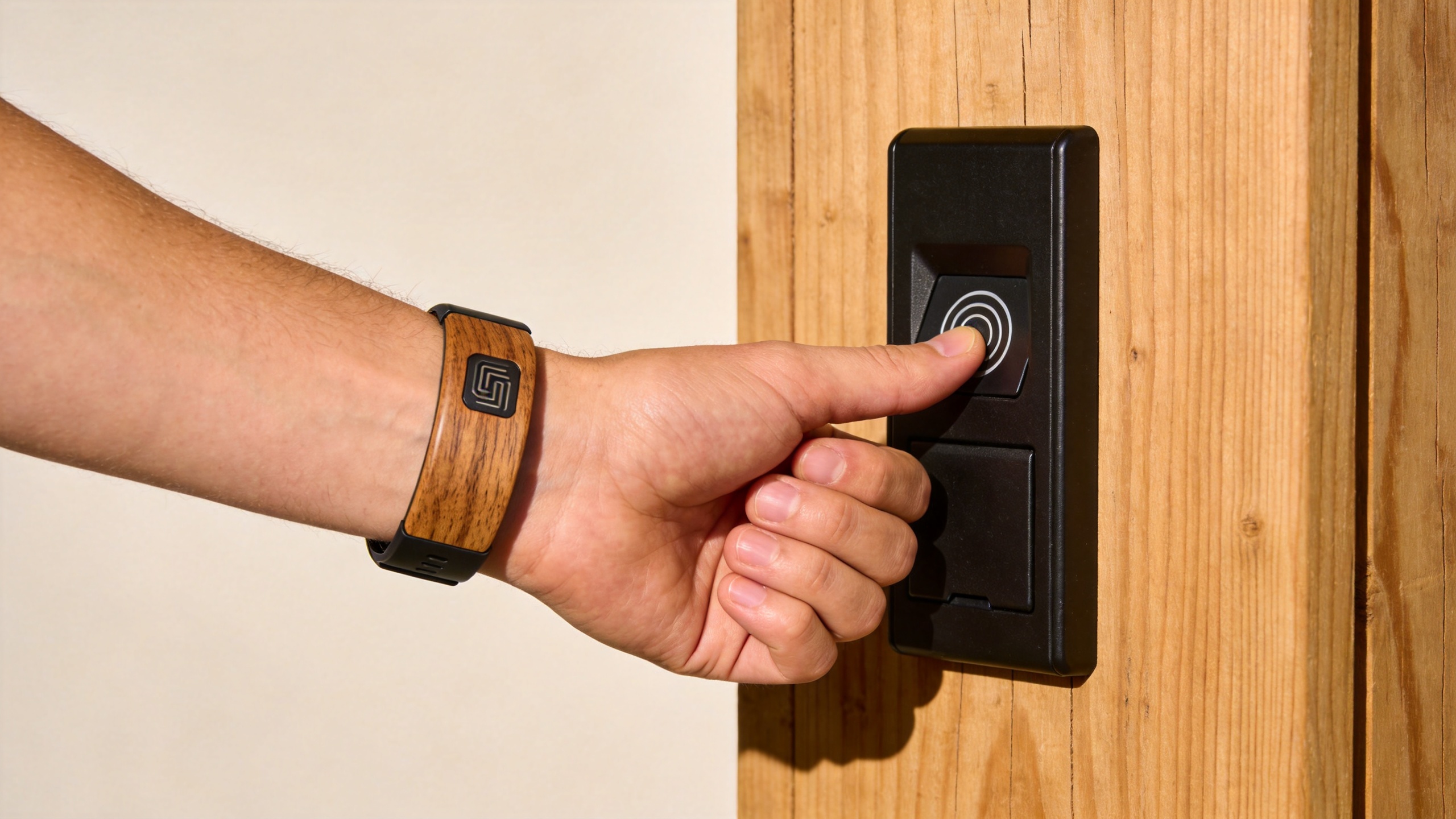
Eco-oriented resorts and nature parks often try to reduce visible single-use plastic while making the arrival experience feel connected to place. A wood RFID face or tag can provide a warmer, more natural presentation than a conventional all-plastic credential, helping custom RFID wristbands match a resort’s design language. With laser marking, it can carry a property name, trail program, room-zone identifier, or event graphic without requiring a disposable paper ticket at every touchpoint.
That presentation is particularly useful when custom rfid wristbands are part of a broader guest journey: check-in, cabin or locker access, activity validation, dining credit, or controlled entry to a timed attraction. The band can make the technology feel less intrusive while keeping a reusable digital identifier available to the venue.
Still, buyers should avoid treating “wood” as a blanket environmental claim. The meaningful comparison depends on the source material, the rest of the assembly, expected number of uses, transport, replacement rate, and end-of-life route. Ask the supplier to explain what the wood element is, what the strap is made from, how the chip is enclosed, and which portions can realistically be separated or reused.
Where custom RFID wristbands make operational sense
Resort check-in and guest-zone access
For a boutique resort, custom RFID wristbands can reduce the number of items a guest must carry between a room, pool, spa, beach club, and activity desk. Custom rfid wristbands are most practical here when the hotel lock or access-control provider confirms the chip family, credential format, and issuance workflow before production. ISO/IEC 14443 is commonly associated with proximity credentials, but sharing a standard label is not the same as proving compatibility with a particular lock, reader, key-management system, or security configuration.
Eco park admissions and timed activities
At an eco park, custom RFID wristbands can help distinguish paid entry from access to a guided walk, conservation exhibit, equipment issue point, or booked time slot. This can reduce manual ticket checks at busy thresholds and give staff a clearer exception process. The strongest use case is not simply “scan everyone”; it is a defined operational problem, such as validating a reservation while keeping queues away from a sensitive trailhead.
In this setting, custom rfid wristbands should be configured with plain, easy-to-recognize visual cues as well as the electronic credential. Staff need a quick way to see whether a guest has the correct band when sunlight, gloves, low connectivity, or a queue makes a scan impractical.
Cashless or account-linked services
Some properties want a band for meal plans, rental deposits, or closed-loop spending. For custom RFID wristbands, that can be convenient, but it also raises data, consent, and lost-band questions. Decide early whether the UID is only a lookup key, what happens after a band is reported missing, which staff roles can issue replacements, and whether a PIN or secondary confirmation is needed for higher-value actions. A well-designed workflow matters more than an attractive wooden token.
Material and durability trade-offs for custom RFID wristbands
Wood is not automatically the right choice for every zone. Wet rides, heavy chlorination, mud, salt spray, abrasive equipment, or a need for aggressive cleaning can put stress on surfaces, adhesives, straps, and printed marks. A resort may choose wood-faced custom rfid wristbands for arrival, lodging, dining, and light activity areas, while using a more water-tolerant credential for aquatic operations or high-contact rentals.
Before approving custom RFID wristbands, request samples and run a small field test. Check comfort for children and adults, edge finish, closure retention, scan performance through the intended reader, readability after normal wear, and how quickly staff can replace a lost band. Test actual conditions rather than a desk-only demonstration: humidity, sunscreen, hand sanitizer, rain, lockers, and the reader mounting position can all affect the guest experience.
Also define whether the wristband is returned, retained as a souvenir, or disposed of after one stay. Reuse can support the venue’s resource goals, but only if collection, inspection, cleaning, re-encoding, and guest communication are workable. A take-home custom RFID wristband may be a branded memento, yet it changes the replacement and credential-deactivation procedure.
A procurement checklist for hotel wristbands and custom RFID wristbands
When comparing custom rfid wristbands, use a written brief rather than selecting from photographs. For hotel wristbands, the following points keep material decisions connected to operations:
- Reader compatibility: confirm chip type, frequency, credential format, encoding responsibility, and a test plan with the deployed system.
- Guest environment: list water exposure, temperature, UV exposure, cleaning chemicals, activity intensity, and expected wear duration.
- Construction: specify the wood element, strap material, fastening style, chip enclosure, marking method, and any comfort or accessibility requirements.
- Visual management: define color or mark conventions for guest category, date, zone, and replacement status without exposing private information.
- Lifecycle handling: decide return, reuse, souvenir, or disposal paths and measure the replacement rate after a pilot.
- Security process: document activation, deactivation, lost-band handling, staff permissions, and audit expectations.
This brief lets a supplier focus on practical configuration rather than making broad claims. It also helps a property compare alternatives fairly: a wood-faced option may improve the theme and perceived quality, while another material may be more appropriate where repeated immersion or heavy abrasion is unavoidable.
How to introduce custom RFID wristbands without overpromising
Start a custom RFID wristbands program with a bounded pilot: one lodge wing, a day-pass program, a guided-tour cohort, or a single access point. Track scan exceptions, replacement requests, staff workarounds, guest comments, and the condition of returned custom RFID wristbands. The pilot should test both the visual proposition and the real RFID workflow. If the band needs frequent replacement or staff must bypass the reader often, change the construction or process before expanding it.
Communications should be equally precise. Explain that the wood detail supports the property’s design direction and that the credential simplifies defined services. Do not claim that any wooden item is carbon-neutral, biodegradable as a complete assembly, or compatible with every system unless that claim has been verified for the actual configuration.
The practical conclusion for custom RFID wristbands
For resorts and eco parks, custom rfid wristbands with a wood element can fit naturally where guests value a tactile, place-sensitive credential and the venue has well-defined access or service workflows. They work well when the environmental narrative is backed by a realistic lifecycle plan and the RFID configuration is tested against the installed system.
The purchasing decision should therefore be conditional, not decorative: choose the wood-forward design for the guest moments it improves, specify a tougher alternative where the environment demands it, and validate every chip-reader-credential combination before rollout. That approach makes hotel wristbands part of an operationally sound low-carbon guest experience rather than a short-lived theme accessory.