EN
 AR
 CS
 DA
 NL
 FI
 FR
 DE
 EL
 HI
 IT
 JA
 KO
 NO
 PL
 PT
 RU
 ES
 SV
 ID
 SK
 SL
 ET
 TH
 TR
 MS
 KA
 UR
 BN
 MN

How to Customize RFID Silicone Wristbands for Brand Promotion
A wristband can be a useful brand touchpoint, but only if the visible design and the RFID workflow are planned as one job. Silicone custom RFID wristbands combine a reusable wearable format with an embedded chip, so they can support controlled entry, memberships, cashless journeys, or a simple phone-tap campaign while carrying a logo people see throughout the experience.
In OEM/ODM production, the most expensive mistake is approving artwork before confirming the chip, reader, and encoding requirements. A sharp logo cannot rescue a wristband that does not work with the deployment. The practical sequence is: define the use case, match the RFID specification, choose the wristband construction, then approve the brand treatment and a pre-production sample.
Start with the job the wristband must do
Before choosing colors or finishes, write a one-page brief for the event, venue, program, or campaign. State whether the band will be used for access control, identification, loyalty, locker access, cashless payments, a smartphone interaction, or a combination. This clarifies what your silicone custom RFID wristbands need to communicate with and what should be encoded.
- Access control: confirm the installed reader frequency, chip family, identifier format, and any anti-passback or database rules.
- Phone-tap engagement: clarify that an NFC workflow is intended. NFC Forum NDEF is a common format for data exchanged by compatible NFC devices and tags, so the destination and tag setup should be agreed before encoding.
- Membership or repeat visits: define whether a unique ID is linked to a customer record and how lost bands are deactivated.
- Cashless or multi-zone programs: map each zone and test the complete reader-and-backend path rather than treating the chip as a standalone feature.
RFID and NFC are related contactless technologies, not interchangeable labels. Ask the system provider for a written compatibility specification. If the program needs unique identifiers, agree on the data structure before production; standards organizations such as GS1 describe structured identifier formats for RFID applications, but the actual encoding plan must match your own platform.
Specify the RFID layer before the artwork
Once the use case is clear, send the supplier a concise technical brief. Include frequency or chip preference, reader compatibility, memory or identifier requirements, whether UID-only delivery is acceptable, encoding ownership, and the test method. For silicone custom RFID wristbands, it also helps to state where the chip module will sit relative to the logo and clasp area.
Do not assume a generic “RFID chip” will be accepted by every existing reader. A sample that scans at a desk may still need validation at the intended gate, counter, or turnstile. If your reader environment is already live, provide the supplier with the actual requirement or arrange a sample test. This small verification step can prevent a full reorder caused by a chip or encoding mismatch.
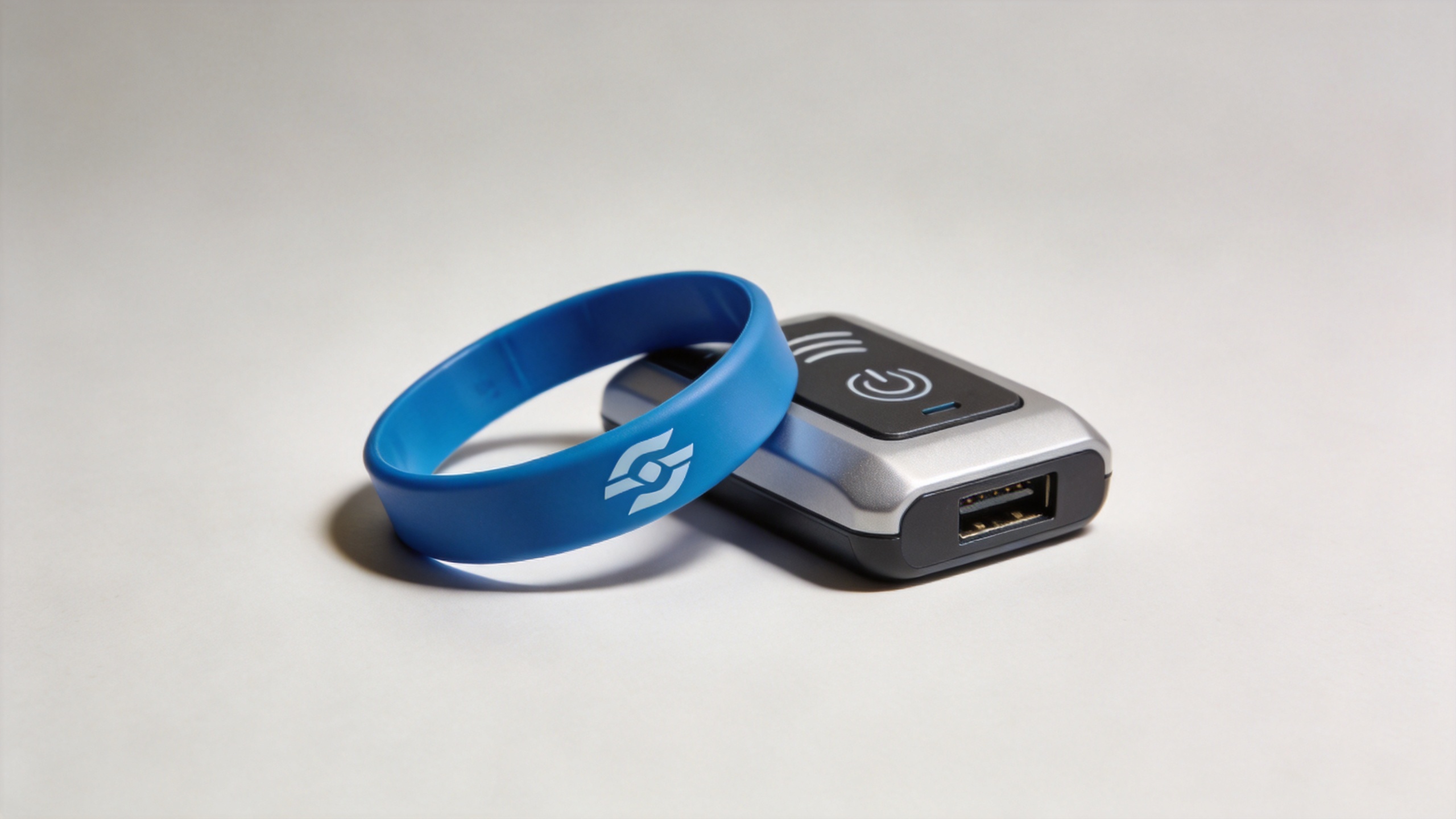
Choose a silicone construction that suits the setting
Silicone is often selected because it feels flexible, cleans easily, and can be reused across repeat visits. Still, silicone is not one fixed specification. Explain where people will wear the band, for how long, and what it may encounter. A gym membership band, a multi-day festival credential, and a water-oriented venue can have different priorities around fit, surface finish, durability, and closure behavior.
Ask for a size range or a sample fit check for the intended audience. For a one-size promotional giveaway, a stretch or adjustable approach may be more appropriate than a fixed adult circumference. For controlled admission, discuss whether a removable band is acceptable. If tamper evidence matters, specify it at the beginning; it cannot reliably be added as an afterthought through artwork alone.
Turn the wristband into a consistent brand asset
The most effective custom RFID wristbands with logo do more than place a logo in the center. They create a simple hierarchy that remains legible on a curved, narrow surface. Start with one primary mark, one or two brand colors, and a short supporting line only when it adds meaning, such as an event name, membership tier, or campaign cue.
- Provide production-ready artwork. Use the supplier’s template and keep important logo details away from seams, stretch zones, and the chip area.
- Select the marking method for the design. Debossed or embossed branding creates a tactile effect; color filling, screen printing, and other print approaches serve different visual goals. Confirm what your chosen finish can reproduce at the actual band size.
- Use color deliberately. Approve a color reference and view a physical sample when exact consistency matters. Screen color alone is not a final production approval.
- Design for a glance. A wristband is seen while moving. Large marks, strong contrast, and limited text generally work better than a miniature brochure wrapped around the wrist.
For campaigns, consider the post-event life of the band. A comfortable, attractive band may be kept as a souvenir, extending brand visibility. That is useful only when the design remains clear after normal wear, so sample approval should include a realistic check of the logo treatment rather than an artwork proof alone.
Plan the encoding and personalization workflow
Branding is usually repeated across the order; data may be unique to every band. Separate these two tracks in the purchase brief. Identify who supplies the data, the required file format, whether serial numbers must be printed, and who confirms the encoded output. If the wristband is tied to personal records, use the minimum visible information necessary and align the workflow with your organization’s privacy and security controls.
A useful production control is a pre-production approval that covers the chip selection, artwork placement, color treatment, variable-data rules, and test criteria. Then agree on a sample or pilot batch before the full run. This is particularly important when silicone custom RFID wristbands must work across several readers or access zones.
Decide which custom features matter most
Not every project needs every option. For a high-visibility launch, logo treatment and a distinct color may lead. For a busy access point, reliable chip compatibility and a readable visual hierarchy come first. For a long-running membership program, comfort, replaceability, and a stable identifier workflow often matter more than a complicated graphic. The right silicone custom RFID wristbands brief ranks these choices instead of trying to maximize every feature at once.
A complete request for custom RFID wristbands with logo should include the target use case, quantity, required delivery date, artwork files, RFID or NFC system details, encoding responsibilities, and sample-testing needs. Confirm the technical specification, production template, physical sample, encoded-data rules, and final quantity in that order.
Use a pre-production checklist
| Check | Question to approve |
|---|---|
| System match | Is the selected chip and identifier/encoding method confirmed for the actual reader ecosystem? |
| Wearer fit | Has size, comfort, and removal/tamper expectations been agreed for the audience? |
| Artwork | Are logo, text, colors, and print/deboss positions approved on the production template? |
| Sample test | Has a physical sample been checked for scanning and visual legibility in the intended environment? |
| Data control | Are encoding files, serial ranges, and acceptance checks assigned to named owners? |
| Quantity buffer | Have you allowed for staff, replacements, last-minute registrations, and test units? |
Brief your supplier with decisions, not assumptions
RFID wristband projects move faster when a supplier receives a complete brief instead of a logo and a vague request for “smart bands.” Share your intended application, system compatibility requirements, artwork, colors, quantity, target date, packaging needs, and sample expectations. Chengdu Mind IOT Technology focuses on RFID, NFC, and UHF wristband categories, which can make a focused technical conversation easier when you need to compare chip and encoding options.
For custom RFID wristbands with logo, request a written confirmation of what is included in the manufacturing and encoding scope. If there is uncertainty, pause for a sample rather than making a late change after volume production begins. That is standard production discipline that keeps a brand-promotion item useful at the point of interaction.
Conclusion
Well-planned silicone custom RFID wristbands make a physical brand cue serve a real operational purpose. Begin with the reader and data workflow, select the appropriate chip and silicone construction, create a clear logo treatment, and approve a physical sample before committing to volume. When technical compatibility and brand execution are reviewed together, the wristband can support a smoother experience for both the organization and the wearer.