EN
 AR
 CS
 DA
 NL
 FI
 FR
 DE
 EL
 HI
 IT
 JA
 KO
 NO
 PL
 PT
 RU
 ES
 SV
 ID
 SK
 SL
 ET
 TH
 TR
 MS
 KA
 UR
 BN
 MN

What Are the Benefits of Lightweight RFID Fabric Wristbands for Events?
At a busy gate, a wristband is not a minor giveaway; it is part of the operating system. As an event-planning adviser, I have found that a successful credential is one attendees can wear comfortably while staff can still use it confidently. A lightweight RFID band can help achieve that balance by combining a soft fabric form with a digital identifier for access, engagement, or payment workflows.
The important qualifier is that “lightweight” is not a substitute for technical fit. The chip, reader, encoding method, clasp, artwork layout, and event environment still need to work together. When those details are confirmed early, fabric RFID wristbands can deliver a noticeably better attendee experience than a purely functional credential.
Why a lightweight RFID band changes the attendee experience
Fabric is often chosen for events where a wristband stays on for many hours or several days. A well-specified lightweight RFID band feels less intrusive than a rigid tag or a heavier bracelet, which matters at festivals, conferences, brand activations, and VIP programs. Comfort is operationally useful: attendees are less likely to fiddle with, remove, or complain about a credential that sits lightly on the wrist.
That comfort also supports the visual side of the event. Fabric gives designers room to use color, logos, patterns, and sponsor messaging in a way that feels closer to merchandise than a temporary pass. For organizers considering custom event bands, the wristband can reinforce the event identity from check-in through the final session rather than looking like an afterthought.
There is a practical distinction worth making. A lightweight fabric construction can be a good choice for a multi-day indoor or festival-style experience, but it should be evaluated against rain, sweat, rough use, and the required security level. The lightest option is not automatically the right option for every venue.
The core benefits for event operations
1. Less friction at entry and throughout the venue
A lightweight RFID band keeps an identifier on the attendee rather than in a pocket, on a lanyard, or on a paper ticket. With compatible readers and correctly prepared data, that can support rapid admission checks and smoother movement between authorized areas. Staff can focus on the scan and the guest rather than searching for a credential.
The wristband itself does not guarantee gate speed. Reader placement, the scan workflow, attendee instructions, and the way the band is worn all affect real-world performance. Testing a representative sample on the wrist before the event is more useful than relying only on an idealized read-range claim.
2. A more comfortable format for longer dwell times
Long schedules expose weak credential choices. A conference attendee may wear a band from breakfast through an evening reception; a festival guest may wear it across multiple days. In those conditions, a lightweight RFID band can reduce the sense of bulk and make the credential easier to accept as part of the experience.
This benefit is especially relevant when the wristband has more than one job. The same chip may be connected to admission, zone access, cashless functions, or engagement points, depending on the event platform. A comfortable band makes that recurring interaction more natural for attendees.
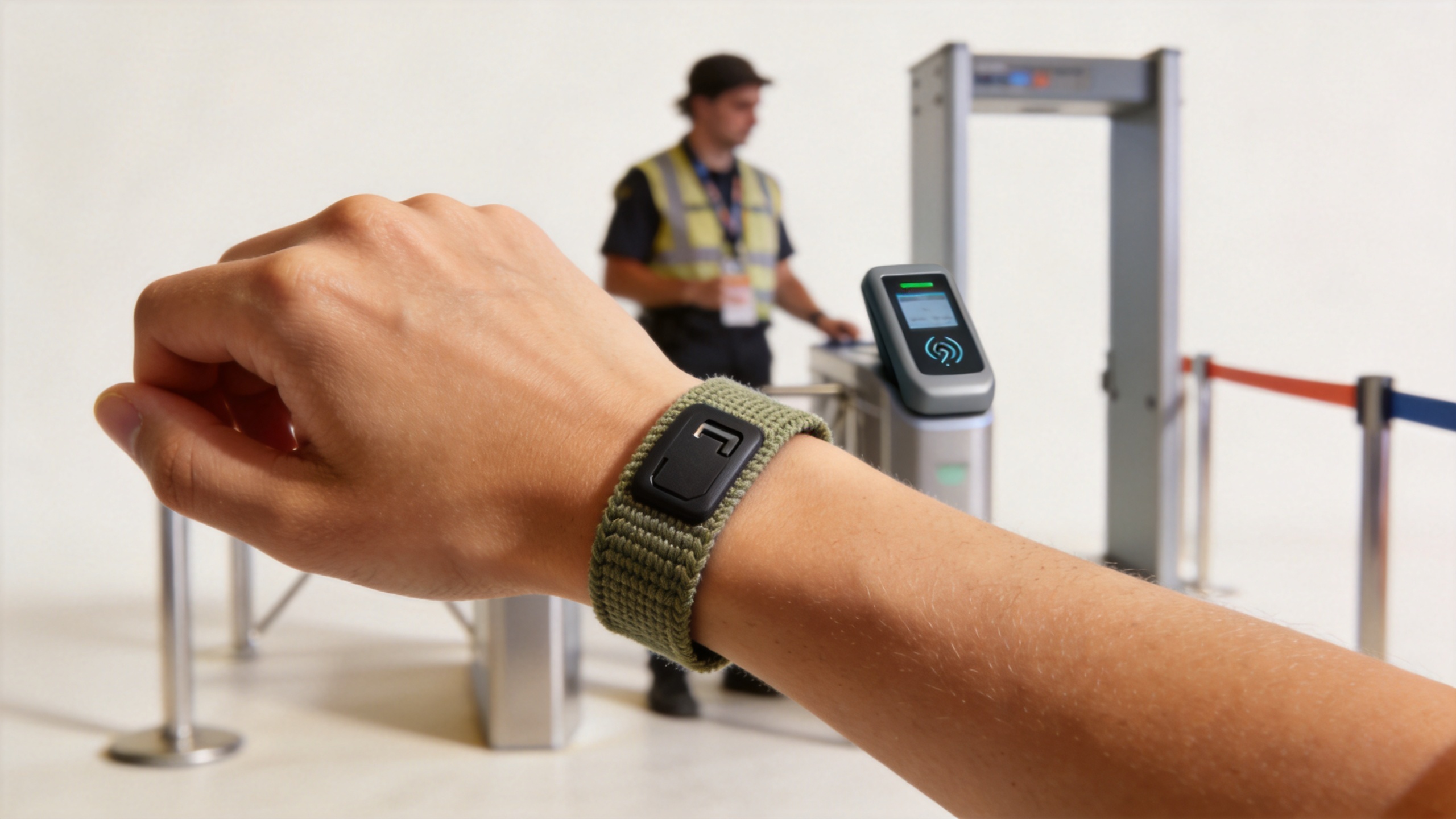
3. Stronger event branding without losing utility
Fabric bands can carry a more considered design while still serving as an RFID credential. For custom event bands, organizers can plan color zoning, sponsor visibility, date markers, or ticket-tier cues into the artwork. That visual layer can help staff make a quick first-pass check in locations where opening a reader is inconvenient.
Design needs to respect the RFID inlay. Artwork should be reviewed with the supplier’s print template so that critical antenna or chip areas are not treated casually. A proof and pre-production sample are sensible checkpoints when the band is expected to represent a major brand or high-value event.
4. Better fit for premium and community-focused events
A fabric wristband can feel more intentional than a disposable admission marker. That does not mean every event needs a premium material, but it can be a useful choice when attendee perception, sponsor presentation, or souvenir value matters. Some guests keep well-designed custom event bands after the event, extending the visibility of the event identity beyond the gate.
The business case should still be tied to the event plan. A one-day, high-volume event with simple access requirements may prioritize another material. A multi-day music event, a conference with distinct zones, or a branded activation may gain more from a light fabric credential that supports both function and experience.
RFID benefits depend on the implementation
The phrase lightweight RFID band describes a form factor, not a complete technical specification. Before approving production, confirm the following with the access-control or event-technology team:
- Chip and frequency compatibility: Match the band to the readers and software already in use. RFID and NFC labels are not interchangeable specifications.
- Encoding requirements: Decide whether bands arrive blank, with UID data, or with an event-specific payload. Confirm the exact file format and a test procedure.
- Clasp and transfer-control needs: If re-entry fraud is a concern, evaluate a one-time or tamper-evident closure rather than relying on appearance alone.
- Wear conditions: Consider duration, weather, water exposure, sweat, and how actively guests will use their hands.
- Distribution plan: Specify whether bands need to be sorted by date, zone, attendee class, or color before they reach the registration desk.
These checks prevent a common purchasing mistake: choosing a band for its look or unit price before confirming whether it belongs in the existing technical workflow. A brief pilot test with the actual reader setup can uncover fit, scan-angle, and encoding issues while there is still time to adjust.
How to decide whether fabric is the right material
Start with the experience you are designing. A lightweight RFID band is particularly compelling when guests will wear it for a long time, when the wristband is a visible part of the brand, or when the credential supports repeated interactions. For a short, budget-sensitive event, a different material may be more appropriate. A more useful question is: “Which band fits this event’s operating conditions and guest expectations?”
Then ask for a sample that reflects the intended chip, clasp, artwork, and use case. Check comfort on different wrist sizes, run live reader tests, inspect the printed area, and clarify how the closure behaves after fitting. This is where a specification-first approach becomes more valuable than a product photo.
Conclusion: light weight is a practical advantage when the details align
A lightweight RFID band can make access credentials more comfortable, more brandable, and easier to integrate into an event experience. It can also support streamlined entry, zone management, and digital interactions when the RFID configuration is compatible with the event system.
For organizers ordering custom event bands, the strongest result comes from pairing a comfortable fabric design with disciplined technical preparation: confirm compatibility, approve artwork around the inlay, validate encoding, and test on the wrist before event day. That process turns a light wearable into a dependable part of the event operation.