EN
 AR
 CS
 DA
 NL
 FI
 FR
 DE
 EL
 HI
 IT
 JA
 KO
 NO
 PL
 PT
 RU
 ES
 SV
 ID
 SK
 SL
 ET
 TH
 TR
 MS
 KA
 UR
 BN
 MN

Why coconut shell RFID wristband become unique eco-friendly identification solution
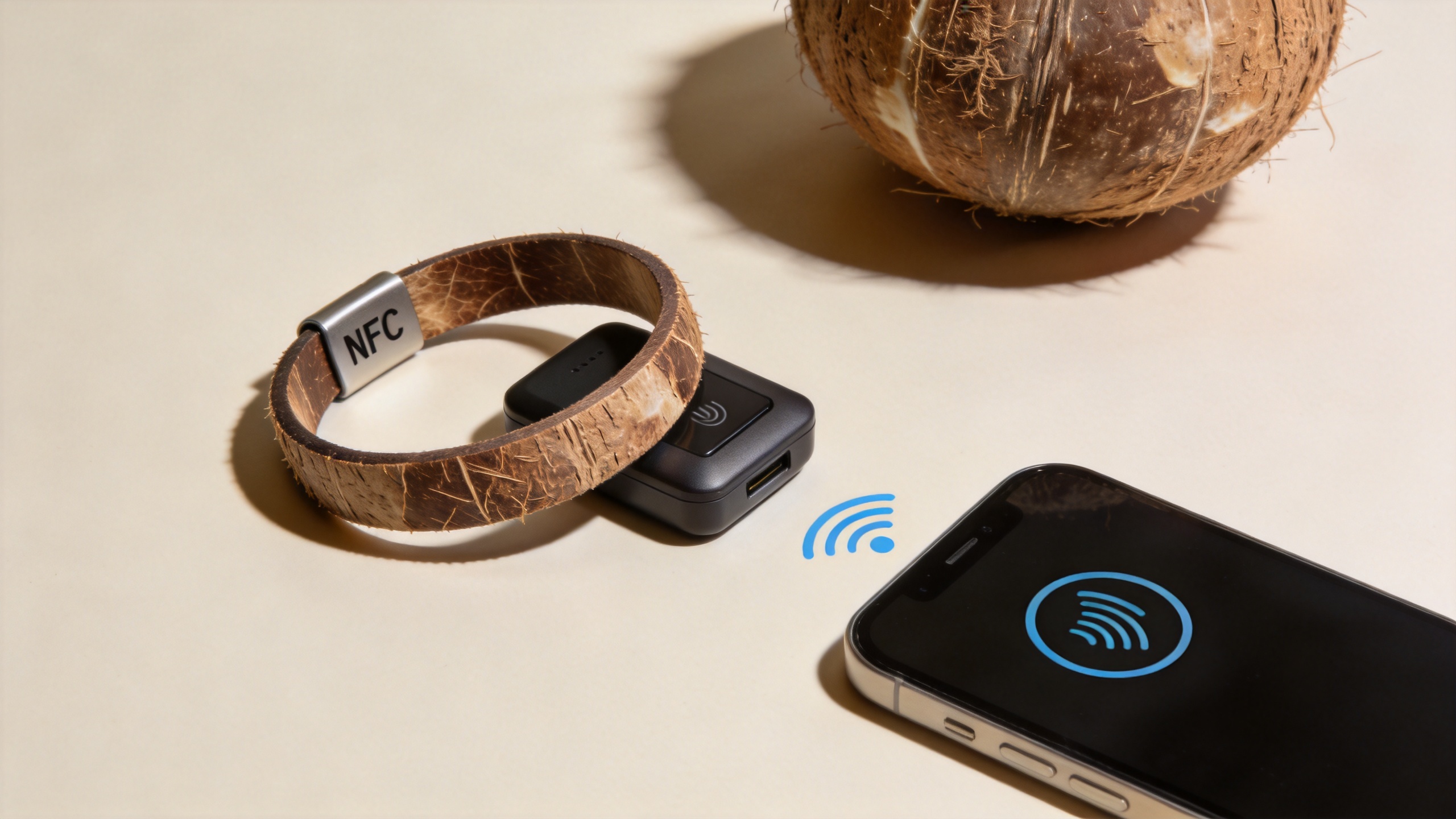
An eco friendly nfc chip bracelet is compelling because it makes a routine credential feel intentional. Instead of handing guests a generic plastic token, an organizer can pair a natural coconut-shell surface with a contactless identity layer. The result can support a tap, a check-in, a membership experience, or a memorable take-home item. But the material alone does not make a program sustainable or technically ready. A useful buying decision starts by separating the visible shell, the NFC inlay, the attachment method, and the data workflow.
For buyers evaluating RFID and NFC wearables, that distinction matters. Coconut shell is a hard agricultural by-product that has long been reused in practical products. NFC, meanwhile, is a close-range contactless technology that operates at 13.56 MHz. A well-specified eco friendly nfc chip bracelet brings those two ideas together without pretending that a natural finish eliminates every material or disposal question in the finished device.
What makes coconut shell different from a standard wristband?
The first difference is tactile and visual. Each shell piece can show its own grain, color variation, and small surface character, so an eco friendly nfc chip bracelet does not read like a mass-printed pass. That is useful when the identifier should reinforce a resort, artisan market, sustainability-themed activation, museum membership, or premium event story.
There is also a material-use argument. Using a coconut-shell component can give a by-product a second role rather than relying only on virgin decorative material. Still, procurement teams should use careful language: the shell component may be renewable or repurposed, while the chip, antenna, adhesive, coating, and band can have different material profiles. A responsible eco friendly nfc chip bracelet description states what part is coconut shell, what part contains electronics, and what end-of-life options are realistically available.
How the identification function works
An NFC bracelet contains an integrated circuit and antenna. When a compatible phone or reader comes close, it can read the identifier or trigger the programmed action. The coconut shell is the exterior identity element; the chip choice, antenna placement, reader environment, and encoding determine whether the eco friendly nfc chip bracelet works as planned.
That is why “NFC” should not be treated as a single universal configuration. A one-tap digital profile may need a different memory setup from a closed-loop event credential. An access-control deployment may need a defined UID or an encoding format that matches an existing system. The practical question is simpler than it first appears: does the bracelet have the right chip? It is whether the selected eco friendly nfc chip bracelet is compatible with the readers, software, and enrollment process already in use.
Where a natural NFC bracelet fits well
The strongest use cases combine identification with a reason to keep the item. For example, a hospitality group can issue a reusable-looking token for guest recognition; a community can connect a member badge to a profile; an exhibition can make an eco friendly nfc chip bracelet part of the visitor journey; and a brand activation can turn a simple tap into a post-event landing experience. In these settings, the object is not just a gate credential. It is a physical reminder of the experience.
An nfc bracelet souvenir works particularly well when the destination page can be updated after the event. The wearer may tap for a photo gallery, a thank-you message, a loyalty enrollment page, or future dates. However, the campaign should set expectations clearly. If the bracelet is intended as an nfc bracelet souvenir, confirm whether the programmed link will remain maintained, whether the chosen tag supports the intended rewrite policy, and whether privacy notices fit the data collection flow.
Four specifications to confirm before production
- Reader and phone compatibility. Define the existing reader technology and the desired smartphone interaction. Ask for a sample-based test rather than assuming every NFC configuration behaves the same way.
- Chip and encoding requirement. State whether the project needs a URL, a unique identifier, a database import file, access-control enrollment, or another format. An eco friendly nfc chip bracelet is only useful when its encoded data fits the operating process.
- Physical construction. Confirm how the shell piece, inlay, cord, clasp, or band are assembled. A premium-looking natural surface should still be comfortable, durable enough for the use period, and appropriate for the environment.
- Claim boundaries. Specify the renewable or reclaimed shell component accurately. Do not label the entire electronic wristband biodegradable unless the supplier can substantiate that statement for every relevant component.
Balance uniqueness with operational reliability
A natural material can introduce variation. That is usually part of the appeal, but it also means artwork, hole placement, thickness, and attachment details deserve an approval sample. Buyers should review the finished eco friendly nfc chip bracelet under the same conditions in which it will be worn and read. For a multi-day program, test comfort and retention. For an access point, test reading flow with the actual reader. For an nfc bracelet souvenir, test the tap experience with common phones and clear instructions.
Chengdu Mind IOT Technology’s RFID, NFC, and UHF wristband focus can be relevant at this stage because technical advice should connect chip selection and encoding service to the buyer’s system requirements. The important point is verification, not a generic promise: document the approved chip type, encoding format, material construction, and expected use environment before a production run.
A more credible sustainability story
A credible sustainability message is specific. An eco friendly nfc chip bracelet can be distinctive because it incorporates a coconut-shell element and can replace disposable printed handouts or one-time paper directions in certain journeys. Yet it should not be presented as a zero-impact object. The electronic inlay and any synthetic parts still need appropriate handling. Where a program values environmental responsibility, plan quantities carefully, encourage retention or return where appropriate, and ask suppliers to explain component materials plainly.
A coconut-shell credential feels distinctive when material, identity, and experience support one another. Select an eco friendly nfc chip bracelet for the story it can tell, but qualify it through compatibility tests and honest material claims. That approach turns a novel wearable into a practical identification solution rather than a decorative idea with an uncertain deployment path.