EN
 AR
 CS
 DA
 NL
 FI
 FR
 DE
 EL
 HI
 IT
 JA
 KO
 NO
 PL
 PT
 RU
 ES
 SV
 ID
 SK
 SL
 ET
 TH
 TR
 MS
 KA
 UR
 BN
 MN

Top Comfort Improvements Lightweight NFC Payment Bracelets Bring for All-Day Wear
A lightweight nfc payment bracelet earns its place when people can forget it is there until it is time to tap. It is easy to call that simple, yet all-day comfort comes from several details: weight, edge shape, fit, skin contact, moisture, and the ease of presenting the wrist at a reader all work together. For resorts, water attractions, festivals, and active venues, a comfortable wearable also helps keep payment access close at hand.
From an attendee perspective, a well-considered lightweight nfc payment bracelet is not merely small. It should feel unobtrusive while walking, swimming, carrying towels, joining activities, or relaxing at a table. At the same time, it must preserve the practical tap motion that makes contactless payment useful. NFC operates at 13.56 MHz and works over a very short range, so consistent placement and a natural wrist movement matter more than a dramatic gesture.
1. Less wrist fatigue from lower mass
The most immediate benefit of a lightweight nfc payment bracelet is reduced awareness of the band during long wear. A heavy, bulky, or stiff device can swing, press into the wrist, or feel more noticeable as the day goes on. Lower mass does not guarantee comfort on its own, but it reduces the pull that can make a loose band rotate or a snug band feel restrictive.
That matters in active settings. When guests move between dining, pools, retail areas, and entertainment, a lightweight nfc payment bracelet is less likely to become the first thing they remove. Wear time is an important practical test: if people take a payment credential off for comfort, the convenience of a wrist-based payment flow drops quickly.
2. A better fit across changing daily conditions
Comfort changes as hands and wrists warm up, get wet, or become more active. A well-designed lightweight nfc payment bracelet should allow a secure, non-pinch fit instead of relying on excessive tightness. The goal is a band that stays in a predictable position without leaving the wearer constantly adjusting it.
One distinction is worth making. Loose is not automatically comfortable; a bracelet that slides toward the hand can make tapping awkward and can catch on clothing or equipment. Conversely, a very tight closure can concentrate pressure. A lightweight nfc payment bracelet works more comfortably when the closure, band width, and flexibility are considered together. If an organizer is evaluating samples, the sensible check is to wear each option through ordinary movements rather than judging comfort from a flat product photo.
3. Softer contact points can reduce distraction
Long-wear comfort often comes down to the areas people barely notice at first: edges, seams, clasps, and transitions around the embedded component. Moisture buildup, sharp edges, and rigid surfaces can become distracting over time. A lightweight nfc payment bracelet with smooth contact areas and a low-profile construction can help avoid the feeling of a hard object repeatedly rubbing the same spot.
Material choice should match the environment rather than follow a single rule. PVC wristbands can offer waterproof and sweat-resistant performance in outdoor or aquatic contexts, while other constructions may emphasize softness or a premium textile feel. A lightweight nfc payment bracelet for an activity-heavy setting should be assessed for drying behavior, flexibility, and how its closure feels after repeated movement. These are usability questions, not cosmetic extras.
4. Easier tap-to-pay movement
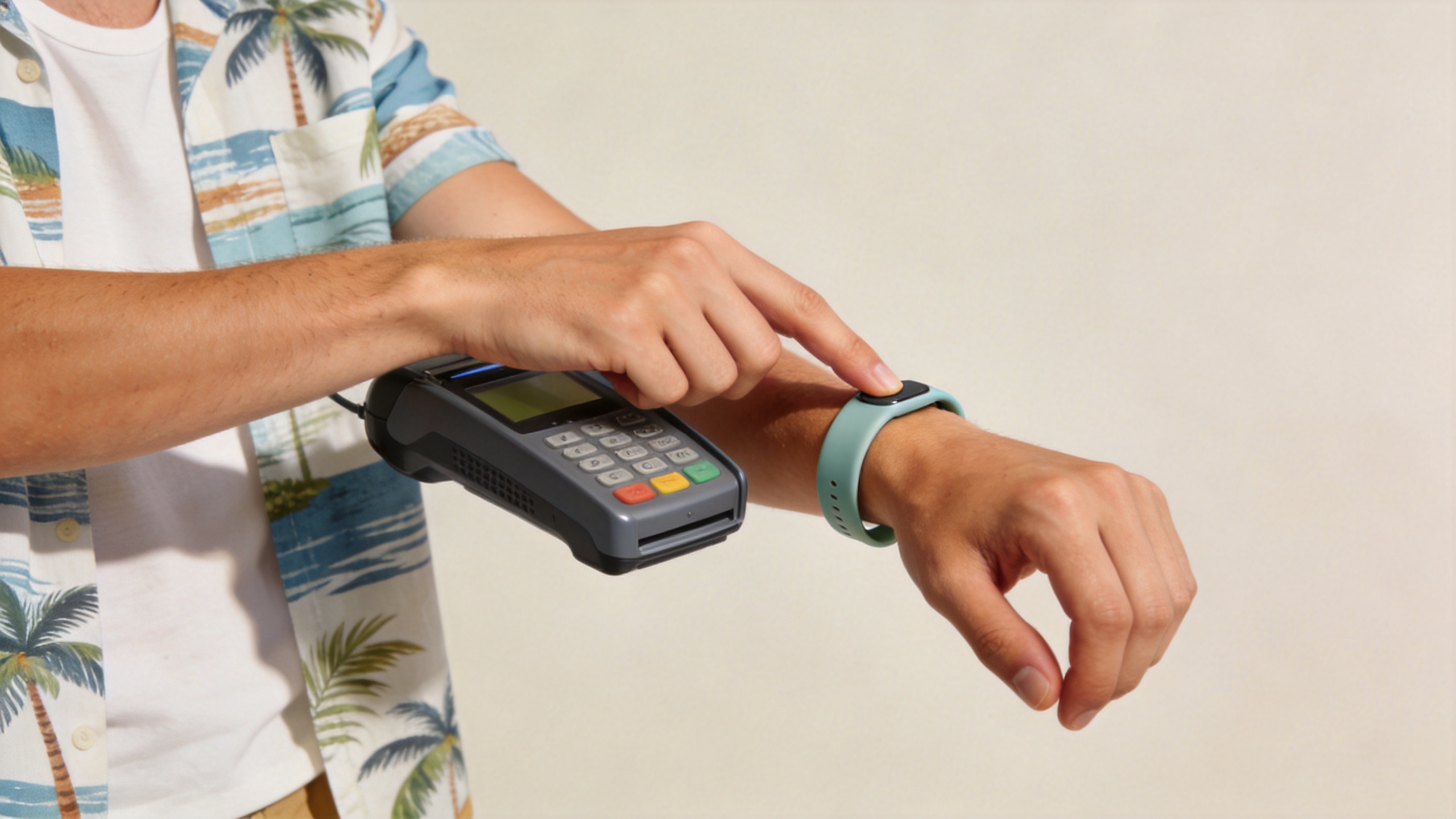
Payment comfort includes the moment of use. A lightweight nfc payment bracelet should make it easy to turn the wrist toward a terminal without twisting the arm, fighting a dangling band, or searching for the embedded chip location. Because NFC is short-range, small positioning habits can affect whether a tap feels smooth or fussy.
This is especially relevant for a nfc payment bracelet for resort environments, where guests may be holding a drink, a room key, a towel, or a child’s hand. An intuitive tap surface reduces the mental load of paying. Before rollout, test a sample at the actual terminal angle and height. A bracelet can be light and attractive yet still feel inconvenient if its antenna area rotates away from the natural tap position.
5. More freedom during resort and venue activities
A lightweight nfc payment bracelet can remove the need to carry a wallet or phone from one activity to the next, but only if it remains pleasant to wear through those transitions. For resort operators, comfort supports adoption: a guest who keeps the band on has a ready payment credential for food, lockers, retail, or access points.
The checklist is straightforward. Look for a profile that does not snag easily, a closure appropriate to the intended use, a material suited to water or perspiration exposure when relevant, and a stable chip position. Do not assume that a lighter band is automatically tougher, more secure, or compatible with every payment system. Confirm the chip protocol, payment platform requirements, and reader setup before an order is finalized.
6. Comfort supports operational consistency
For organizers, a lightweight nfc payment bracelet is also an operational tool. When attendees wear the credential consistently, staff spend less time helping people locate cards, phones, or replacement bands. The benefit is not a promise of instant queues or universal compatibility; it is a better chance that the intended tap-to-pay experience is available when guests need it.
A small pilot often tells an organizer more than a specification sheet does. Ask test wearers to use the lightweight nfc payment bracelet during meals, activity changes, and a wet or warm period. Note whether it rotates, catches, feels tight later in the day, or requires an awkward wrist angle at checkout. Those observations turn “lightweight” into a measurable comfort requirement.
Choose comfort as part of payment usability
The strongest lightweight nfc payment bracelet designs make the technology feel secondary to the experience. Lower mass, a stable fit, smooth skin-contact areas, appropriate materials, and a natural tap position can all improve all-day wear. For an nfc payment bracelet for resort use, assess the whole guest journey rather than one feature in isolation. When comfort and payment usability are planned together, the wearable is more likely to stay on the wrist and be ready for the next tap.