EN
 AR
 CS
 DA
 NL
 FI
 FR
 DE
 EL
 HI
 IT
 JA
 KO
 NO
 PL
 PT
 RU
 ES
 SV
 ID
 SK
 SL
 ET
 TH
 TR
 MS
 KA
 UR
 BN
 MN

How RFID Bracelet for Amusement Park Alleviate Cash-Receiving Pressure for Park Merchants
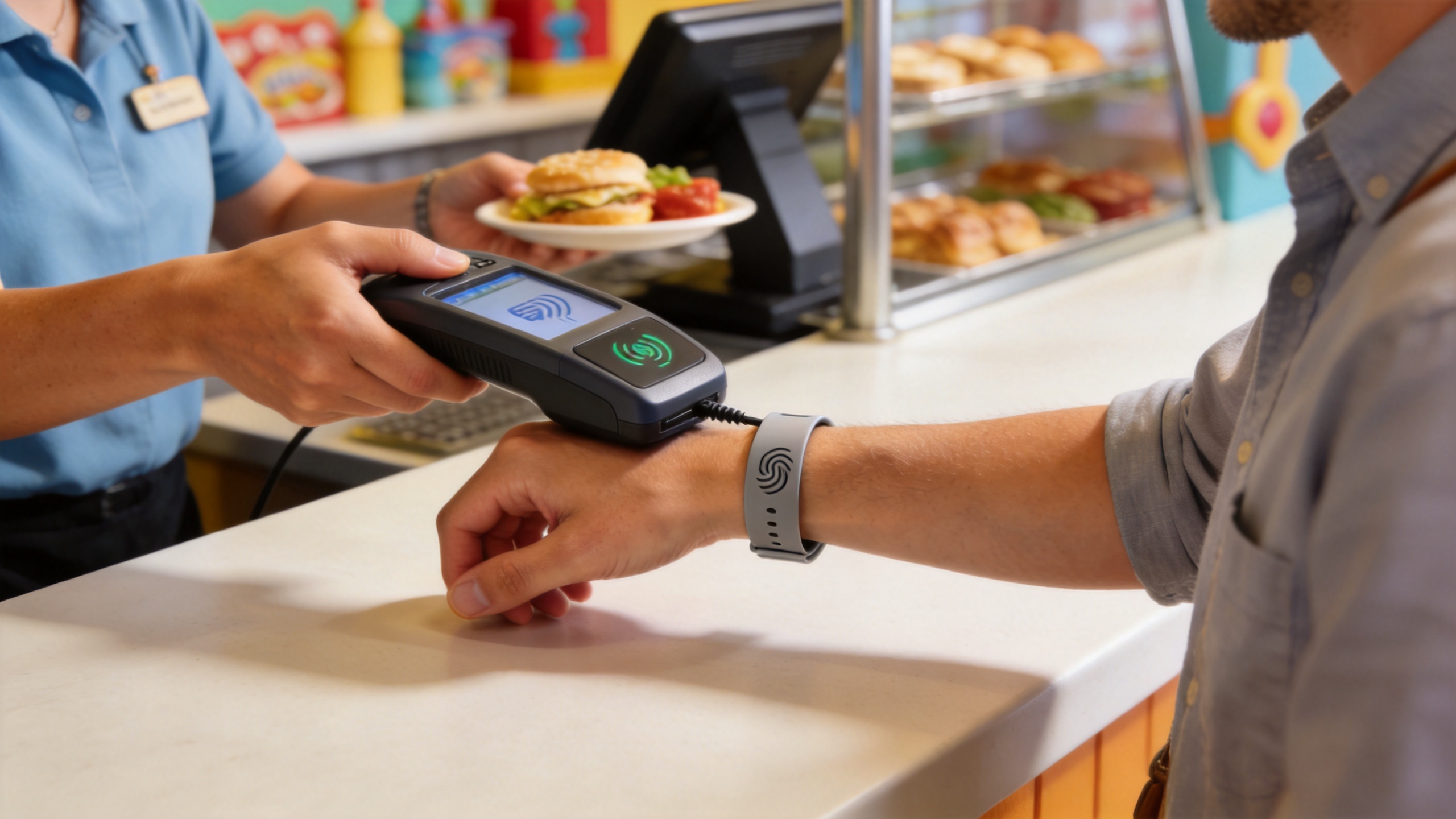
At a busy park, a snack counter or souvenir shop can become the point where a good guest experience starts to fray. A guest looks for a wallet, staff count notes, change is checked twice, and the next family waits behind them. An rfid bracelet for amusement park use can change that transaction path: instead of handling cash at every counter, the merchant can identify the guest’s payment credential with a tap and let the connected payment platform apply the appropriate balance or approved payment rule.
The important point is not that every park needs the same wristband. It is that a cashless rollout should be designed around merchant pressure: queue peaks, staff handoffs, exception handling, and reconciliation after closing. As an RFID systems engineer, I would start there rather than with wristband color or unit price. A low-cost band that does not match the reader, encoding format, or payment workflow can simply move the problem from the cash drawer to the service desk.
Why cash receiving creates pressure inside a park
Cash receiving is not one task. At a food kiosk, staff may need to confirm the item total, accept payment, make change, safeguard notes, and resolve a dispute while serving the next guest. At a retail counter, the same employee may also be managing stock questions, returns, or age-restricted sales. During a peak interval, each added handoff creates more opportunity for a slow transaction or a discrepancy.
Cashless park systems are commonly used to reduce cash handling, make payments more convenient, and support cleaner transaction records across food, retail, rides, and other facilities. Those benefits are operational possibilities, not automatic guarantees. A park only realizes them when its payment rules, reader behavior, staff training, and exception process are aligned.
What an RFID bracelet changes at the merchant counter
An rfid bracelet for amusement park operations can act as the guest’s credential. When the bracelet is presented to a compatible reader, the system can identify the credential and request an authorization from the park’s configured cashless platform. The cashier no longer needs to count physical currency for that routine transaction. That can reduce the amount of cash that has to be received, stored, moved, and reconciled at individual merchant points.
- Fewer physical-cash steps: staff can focus on confirming the order and responding to the guest instead of repeatedly calculating change.
- A more consistent checkout action: a tap-based flow can be easier to teach across seasonal or rotating merchant teams when the screen prompts are clear.
- Better exception visibility: declined balances, unread credentials, and duplicate-tap safeguards can be routed into defined procedures rather than improvised at the till.
- Centralized records: transaction data can be available to the payment and operations teams according to the park’s system configuration, which may simplify end-of-day review.
There is a practical caveat. A tap is only fast when the reader recognizes the chip reliably and the back-end response is available. If a credential cannot be read, staff still need a calm fallback process. This is why the rfid bracelet for amusement park specification is an operations decision, not merely a promotional-item purchase.
Start with system compatibility, not the wristband artwork
Before selecting an RFID wristband, document the existing readers, payment platform, access-control software, and the data the system expects to receive. Some deployments use particular chip protocols, memory structures, security keys, or encoded payloads. The wristband must be selected and encoded to work with that environment; superficially similar bands can behave very differently when they reach a live counter.
Ask the integration team and supplier to confirm these points before a full order:
- Which reader technology and chip protocol are already in use at merchant locations?
- What identifier or data must be encoded, and who controls the keys or encoding rules?
- What happens when a balance is insufficient, a band is unreadable, or a guest asks for a refund?
- How will the park test a representative batch across food, retail, and ride-adjacent locations before opening day?
- Who can access the transaction records, and how will cashless totals be reconciled with the park’s finance process?
Compatible chip options, pre-encoding, and batch-level quality checks can remove work from the merchant team before gates open. But they must be confirmed against the actual system. There is no universally suitable chip for every park: if the park’s installed platform specifies a format, that requirement takes priority over a generic wristband recommendation.
Where custom printing supports the workflow
A rfid bracelet custom print program can do more than carry a logo. Clear visual design can help staff and guests distinguish admission types, event dates, zones, age categories, or staff credentials. For a multi-day park event, a visible design cue may reduce basic questions at the counter and help staff spot an obviously wrong credential before attempting a transaction. It should not replace system validation, however; printed appearance is not proof of payment eligibility.
When planning an rfid bracelet custom print layout, reserve space for the park identity and any essential visual markers, but do not let artwork decisions obscure the chip inlay area or complicate reader performance. Confirm the material, finish, print proof, and encoding plan together. This small coordination step is especially valuable when the same band will be used for entry, cashless purchases, and access to selected attractions.
Build a merchant-ready rollout, not just a wristband order
A useful rollout begins with a small working map of the guest journey: top-up or payment registration, entry, food purchase, retail purchase, support desk, and departure. For each point, define what staff see, what they do when the normal tap succeeds, and what they do when it does not. That gives managers a concrete way to assess whether an rfid bracelet for amusement park deployment is reducing work at the counter or creating new questions elsewhere.
Test the workflow under realistic conditions. A counter test should include ordinary purchases, insufficient funds, a damaged or unreadable band, a refund request, and a network or device interruption. The goal is not to promise friction-free queues; it is to keep staff from inventing procedures while guests are waiting. Pre-encoded wristbands and a UID registry can help the implementation team prepare the credential data in advance, provided those services match the park’s chosen system.
Measure the relief where merchants feel it
After launch, look beyond headline sales. Compare the frequency of cash-handling exceptions, time spent on till counts, support-desk questions related to payment credentials, and the types of transactions that require supervisor intervention. These local measures tell a more useful story than a broad claim that RFID is faster. They also reveal whether a reader location, a staff instruction, or a balance rule needs adjustment.
For park merchants, the value of an rfid bracelet for amusement park program is therefore practical: it can move routine transactions away from repeated cash receiving and toward a controlled credential flow. With compatible hardware, accurate encoding, clear custom design, and an agreed exception process, staff can spend less attention on notes and coins and more attention on serving guests. That is the operational pressure the project should be built to relieve.