EN
 AR
 CS
 DA
 NL
 FI
 FR
 DE
 EL
 HI
 IT
 JA
 KO
 NO
 PL
 PT
 RU
 ES
 SV
 ID
 SK
 SL
 ET
 TH
 TR
 MS
 KA
 UR
 BN
 MN

What Technical-Support Services a Professional Programmable RFID Bracelet Factory Can Provide
Choosing a programmable rfid bracelet factory is not only a purchasing decision. It is an integration decision. A bracelet that looks right but uses an incompatible chip, incorrect data format, or untested encoding workflow can slow entry, complicate cashless operations, or leave staff with avoidable troubleshooting on launch day.
As an RFID solutions engineer, I would begin with the system constraint: what readers, software, identifiers, and operating conditions must the bracelet work with? A capable factory helps turn those answers into a buildable specification before production starts. The support is most valuable when it reduces ambiguity at each handoff—from reader compatibility through programming, sample approval, delivery, and operational follow-up.
Start with reader and system compatibility
The first technical-support task is discovery. A professional programmable rfid bracelet factory should ask for the existing reader model, frequency band, chip or credential requirements, software platform, identifier format, security expectations, and intended application. For example, an access-control system that reads only a UID has different needs from a workflow that writes sector data or relies on encrypted credentials.
Frequency alone is not enough. HF systems commonly operate around 13.56 MHz, yet protocol, chip family, memory layout, reader configuration, and application software still determine whether a deployment works as expected. ISO/IEC 14443 provides relevant proximity-card communication context, but it does not replace a compatibility review of the actual installed system.
- Confirm the reader and software environment before recommending a chip.
- Clarify whether the project needs UID-only identification, NDEF data, custom memory data, or protected sectors.
- Define the intended bracelet material, clasp style, durability conditions, and visual customization separately from the electronic requirement.
That is where a technical programmable rfid bracelet manufacturer adds more value than a generic catalogue supplier: it translates a business request such as “fast entry” into testable chip, encoding, and operating requirements.
Recommend a chip and memory approach that fits the use case
After discovery, the factory can propose practical chip options and explain the tradeoffs rather than presenting every option as interchangeable. A basic identification workflow may only need a stable identifier. A mobile-interaction campaign may need an NFC-compatible tag and a defined NDEF record. A more controlled access environment may require a chip family and credential process specified by the system provider.
Memory planning is a useful example. NXP lists NTAG213, NTAG215, and NTAG216 as NFC Forum Type 2 tag-compliant ICs with 144, 504, and 888 bytes of user memory respectively. Those figures do not make one option universally better; they help a buyer ask the right question: how much data must be written, who will read it, and what needs to remain changeable later?
A reliable programmable rfid bracelet factory should document the proposed chip, operating assumptions, and any limitations before the purchase order is finalized. If the venue has legacy hardware, the factory should encourage confirmation with the system integrator rather than promising compatibility from a keyword or a photo of a reader.
Convert programming requirements into a controlled encoding plan
“Programmable” can mean several different services. It may mean printing a visible serial number, encoding a UID list supplied by the buyer, writing an NDEF payload, loading custom memory data, or preparing sequential records for an event platform. The factory’s support should distinguish these tasks clearly.
Data preparation and validation
A solid workflow begins with a controlled input file, agreed field names, format rules, duplicate handling, and responsibility for the source data. Before bulk programming, the factory can verify whether sample records conform to the expected format. That step matters because a perfectly manufactured bracelet cannot correct an invalid guest list or a mismatched identifier convention.
Sample encoding and approval
Before the full run, request a small encoded sample set. The buyer or system team can test it on the actual reader, through the intended software, and in the conditions that matter most. If your event is fully indoors and only uses one standard gate flow, the test may be straightforward. If it spans several days, has wet conditions, multiple zones, re-entry rules, or payment functions, the acceptance test should be broader.
Traceability and separation
For projects involving multiple ticket classes, venues, or data batches, technical support can include batch labels, sequence controls, and packaging instructions. These are operational safeguards, not cosmetic extras. They reduce the chance that a programmed batch is mixed with an unprogrammed or differently configured batch during distribution.
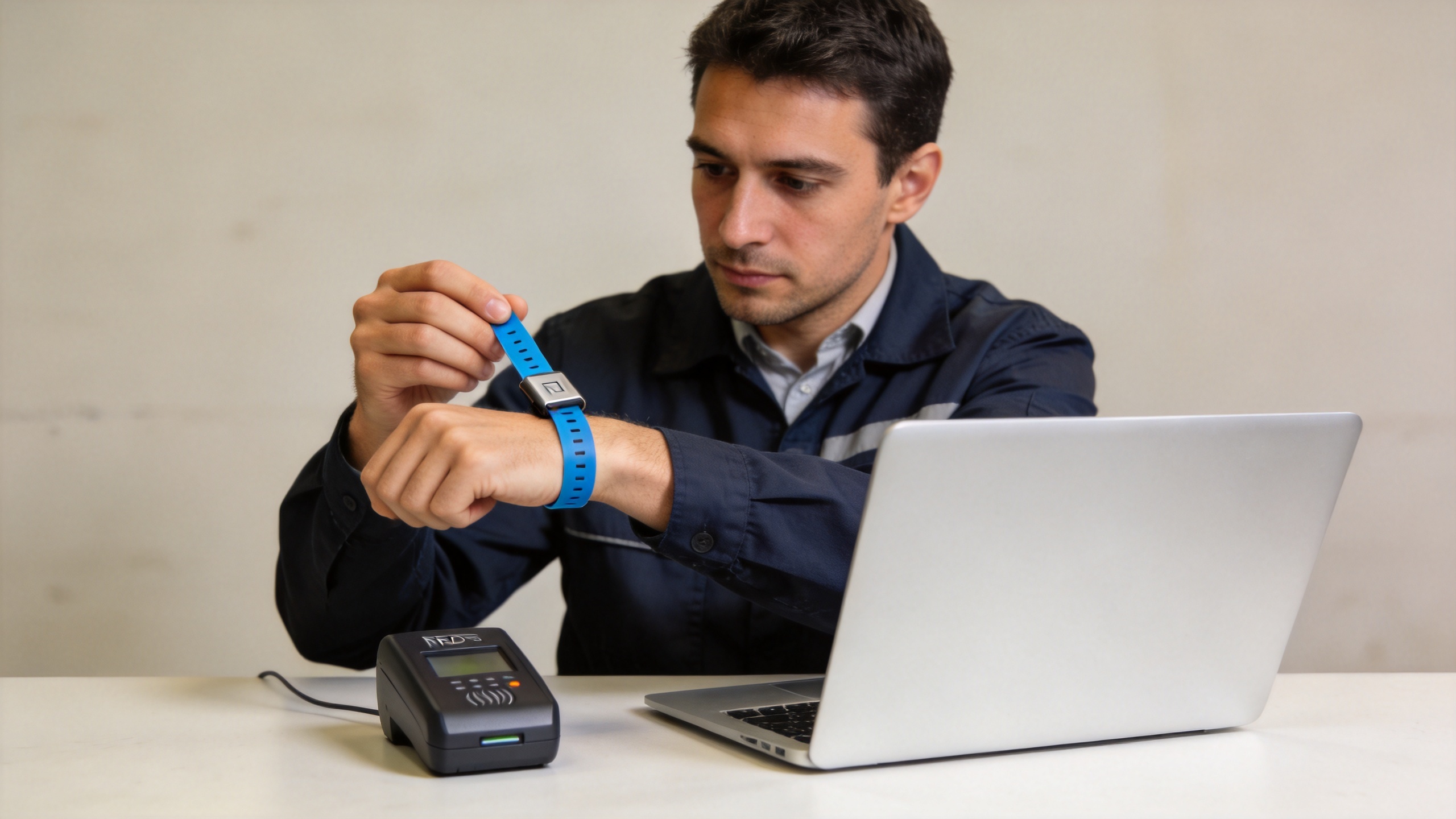
Support production quality checks that reflect the deployment
A professional programmable rfid bracelet factory can align inspection with the agreed specification: visual print checks, encoding verification, selected read tests, data-sequence review, and packaging confirmation. The exact sampling method should be agreed in advance, especially when a project has a defined acceptance plan.
Buyers should ask what is checked, how exceptions are recorded, and what happens if a programmed record fails validation. A useful answer is specific about the workflow without inventing performance promises. For instance, the factory may identify unreadable or incorrectly encoded units during its agreed test process, isolate them, and follow the approved rework or replacement procedure.
Help with deployment readiness, not just shipment
Technical support does not need to end when cartons leave the factory. For time-sensitive access-control work, a programmable rfid bracelet manufacturer can help the buyer prepare a deployment checklist covering reader setup, test credentials, batch counts, spare allocation, staff instructions, and escalation contacts.
This is also the point where procurement becomes supply-chain planning. The moment an organizer runs recurring events, the question shifts from “which bracelet has the lowest unit price today?” to “which supplier can preserve the same chip and encoding specification across reorders?” A factory that retains an approved specification and version-controlled programming instructions can make repeat ordering less error-prone, provided the buyer confirms that the installed system has not changed.
Provide practical troubleshooting boundaries after delivery
Support is strongest when responsibilities are clear. A factory can assist with production records, encoding documentation, sample comparisons, and fault-isolation questions. It cannot safely diagnose every problem remotely without knowing the reader configuration, network status, software rules, and the specific bracelet data involved.
When a scan issue occurs, a sensible triage sequence is to test a known-good bracelet, compare the reader response, confirm the expected identifier or payload, isolate whether the issue affects one unit or a batch, and review the agreed encoding record. This prevents a rushed assumption that the bracelet is at fault when the source may be the reader, application configuration, or operating process.
Questions to ask before choosing a factory
- Can the factory review our reader, platform, chip, and data requirements before production?
- What programming services are included, and what input-file format is required?
- Can we approve encoded samples on our own system before the full run?
- How are programmed batches labeled, checked, and separated for delivery?
- What documentation and troubleshooting information will be available after shipment?
- How will approved specifications be preserved for repeat orders?
Choose support that makes the specification usable
The right programmable rfid bracelet factory does more than offer chip options and printing. It helps you define compatibility, convert requirements into an encoding plan, validate samples, control batches, and investigate issues using documented facts. That is the practical difference between buying a programmable item and building a wristband deployment that your readers, software, and operations team can actually use.