EN
 AR
 CS
 DA
 NL
 FI
 FR
 DE
 EL
 HI
 IT
 JA
 KO
 NO
 PL
 PT
 RU
 ES
 SV
 ID
 SK
 SL
 ET
 TH
 TR
 MS
 KA
 UR
 BN
 MN

Why Event Planners Prefer Eco-Friendly NFC Bracelet for Sustainable Brand Campaigns
For an event planner, a wristband is no longer just a line item at registration. It can be a credential, a guest touchpoint, a campaign object, and a material decision that stays visible long after the doors close. That is why an nfc bracelet is increasingly part of conversations about sustainable brand campaigns. The appeal is not that a chip magically makes an event green. It is that one well-planned wearable can connect access, participation, and follow-up while giving the team a reason to reduce disposable handouts, paper instructions, and fragmented guest journeys.
Having managed event-access decisions, I have learned that the useful question is not “Which wristband looks sustainable?” It is: “What job must this wristband do from setup through collection or reuse?” An eco-conscious nfc bracelet earns its place when its material, chip, artwork, encoding, and end-of-event plan all match the campaign.
It turns a physical credential into a simple brand touchpoint
An NFC-enabled wearable lets a guest tap a compatible phone or reader to open a defined digital experience. Depending on the event system, that might support check-in, access permissions, a campaign landing page, a product story, a feedback form, or a post-event resource. Search results for NFC wristbands commonly associate them with event access control, ticketing, payment workflows, and membership identification. For brand teams, the value is continuity: the object used at arrival can also guide a guest toward a purposeful next action.
A nfc chip bracelet is most useful when the tap destination is specific. Rather than sending every attendee to a generic homepage, planners can assign one useful destination: a session agenda, a refill-station map, a product traceability explanation, or an opt-in follow-up page. Keep the experience lightweight. A tap should save time or reveal something relevant; it should not feel like another form to complete.
It can support waste-reduction goals without overstating environmental claims
Sustainable-event guidance consistently treats waste reduction as a planning system, not a label. Reuse, correct collection, and disposal instructions matter alongside material choice. The same principle applies to an nfc bracelet. A reusable or recyclable option only contributes to a stronger outcome if the event has a realistic route for return, reuse, or separation after the event.
Start by deciding whether the wristband is meant to be kept, returned, or processed through a known material stream. A multi-day festival may need a durable fabric construction and a clear return incentive. A one-day activation may favor a simple design with minimal components and a visible collection point. Avoid broad claims such as “zero waste” unless the full program and evidence support them. It is more credible to explain what the team is reducing, how guests should handle the wristband, and what happens next.
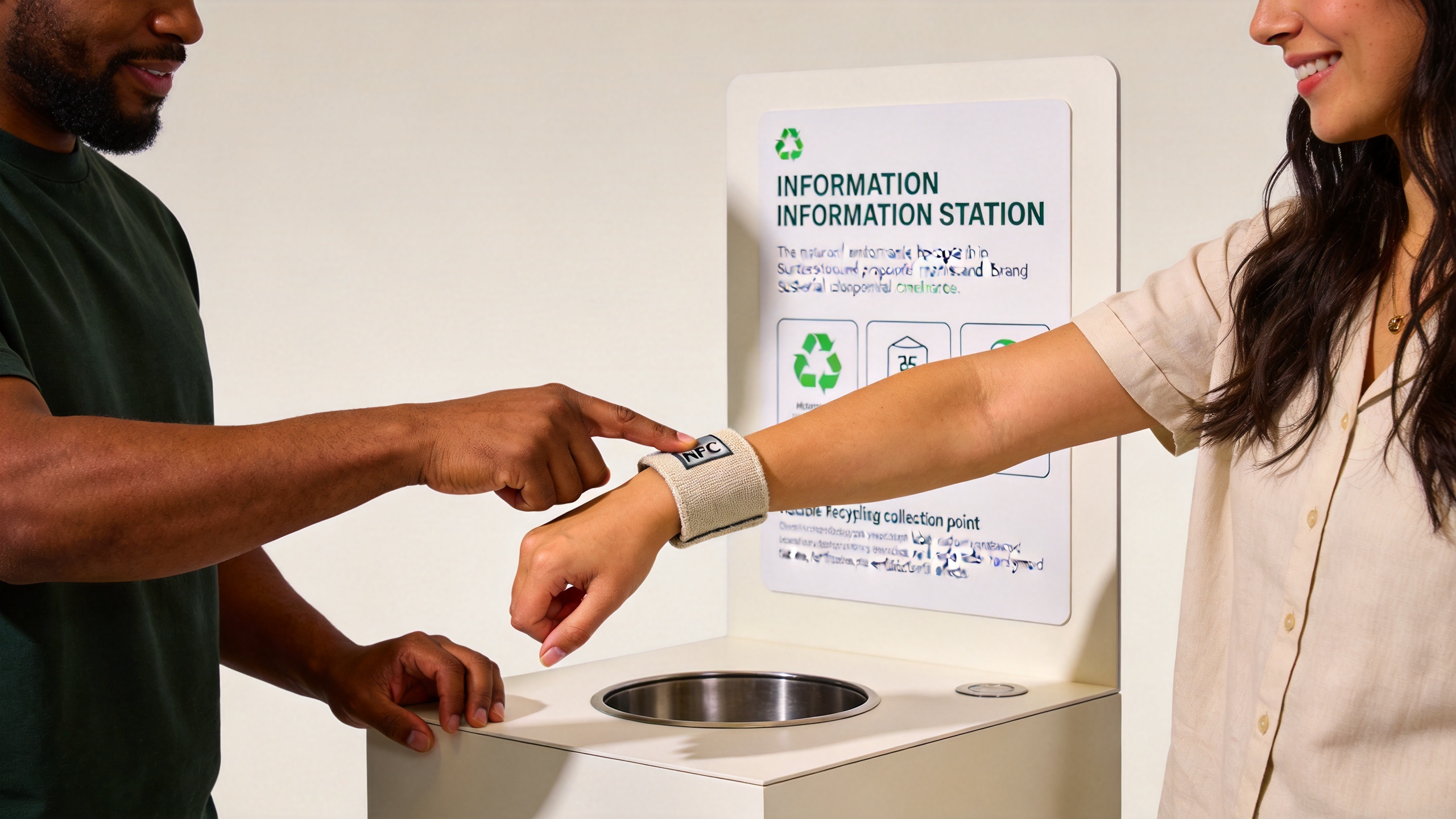
It brings access, engagement, and campaign operations into one workflow
Event teams often run separate tools for registration, wayfinding, sampling, and lead capture. That separation can create more printed materials, more staffing work, and more chances for guests to miss an instruction. A thoughtfully deployed nfc bracelet can simplify the handoff between those moments. The chip does not replace the event platform; it gives attendees a familiar physical trigger for reaching the correct digital experience.
Before ordering, map each tap point against an operational outcome:
- Arrival: confirm that the credential works with the reader or check-in process already in place.
- On-site discovery: use one tap route for an agenda, map, or campaign activity rather than printing repeated instructions.
- Brand engagement: connect a tap to a consent-aware page with a clear value exchange for the attendee.
- Close-out: direct guests to return, retain, or correctly sort the wristband through visible signage and staff briefing.
This is where the planning detail matters. A wristband with the wrong chip type or an untested encoding workflow can create avoidable gate problems. Test the entire chain early: chip, reader or phone behavior, encoded content, connectivity, artwork, and the guest instructions. The nfc bracelet should reduce friction, not introduce a last-minute technical dependency.
How to make the NFC bracelet useful, not merely novel
A useful nfc bracelet needs a short, rehearsed guest journey. At registration, staff should know whether the nfc bracelet is already encoded, whether a tap is optional, and what to do when a phone has NFC disabled. At the activation, the call to action should name the benefit: “Tap for the session map,” “Tap to save your refill pledge,” or “Tap to receive the post-event recap.” This is better than asking people to tap a nfc chip bracelet simply because the technology is present.
Build a fallback too. A QR code on nearby signage, a staffed lookup process, and a short URL can keep the campaign accessible if an attendee cannot use the nfc bracelet. The fallback does not diminish the wearable; it protects the attendee experience and keeps the campaign from depending on one device behavior.
It gives sustainable campaigns a more memorable physical cue
Digital campaigns are easy to lose in a crowded inbox. A wearable credential stays with the attendee during the event, making the brand interaction more immediate. The most effective designs do not rely on novelty alone. They combine a comfortable format, clear visual identity, and an action guests understand in seconds. A nfc chip bracelet can carry a campaign message visually while the NFC function connects that message to a deeper digital story.
Material is application-specific. An indoor launch lasting a few hours has different durability needs from a wet, multi-day outdoor event. Likewise, a premium branded keepsake has different requirements from a returnable access credential. Ask suppliers about the available material and chip options, then validate the combination against your event conditions instead of assuming that one format is inherently better for every sustainability goal.
How to set responsible NFC bracelet requirements
Write requirements before the artwork is approved. State the event duration, indoor or outdoor exposure, expected attendee volume, reader environment, tap destination, data or consent boundaries, and final handling route. This prevents a nfc bracelet from becoming a vague “green” giveaway with a chip added late in production. It also helps a supplier recommend compatible formats without assuming that every NFC option has the same memory, durability, or reuse characteristics.
For a nfc chip bracelet intended for return, consider how it will be cleaned, sorted, stored, and reissued. For a keepsake, explain why a guest would retain it and ensure the destination remains useful after the event. These practical choices make a sustainability message more credible than an unqualified material claim.
What to confirm before you choose an NFC bracelet
A sustainable brand campaign needs a procurement brief that is as practical as the creative concept. Use this checklist before production:
- Define the primary purpose. Is the nfc bracelet for access, a tap-to-engage campaign, or both?
- Confirm system compatibility. Match the chip and encoding plan to the readers, phones, and software the event will actually use.
- Choose a material route. Document whether the item will be retained, returned, reused, or directed to an identified recovery stream.
- Plan attendee communication. Put tap instructions and return or disposal guidance where guests will see them.
- Test a sample workflow. Run a real check-in and tap journey before committing to a full production run.
- Measure the campaign outcome. Agree on a small set of useful signals, such as completed taps, session interactions, return participation, or consented follow-up—not vanity metrics alone.
A better brief produces a better campaign object
Event planners prefer an nfc bracelet when it solves several real problems at once: it can streamline a guest interaction, reinforce brand presence, and support a documented waste-reduction plan. The technology should remain in service of the attendee experience. NFC Forum materials describe NFC as a tap-based technology used for interactions such as access and connection with smart devices, but the outcome still depends on thoughtful event design.
For sourcing teams, a specialist that works across RFID, NFC, and UHF wristband categories can help frame the compatibility questions early: what must the credential connect to, how will it be encoded, and which format is appropriate for the campaign environment? Keep the conversation grounded in your system, timeline, artwork, and end-of-event plan. When those decisions are made together, the wristband becomes a useful campaign tool rather than another disposable giveaway.