EN
 AR
 CS
 DA
 NL
 FI
 FR
 DE
 EL
 HI
 IT
 JA
 KO
 NO
 PL
 PT
 RU
 ES
 SV
 ID
 SK
 SL
 ET
 TH
 TR
 MS
 KA
 UR
 BN
 MN

How RFID Wood Wristband Balance Environmental Concept and Identification Performance
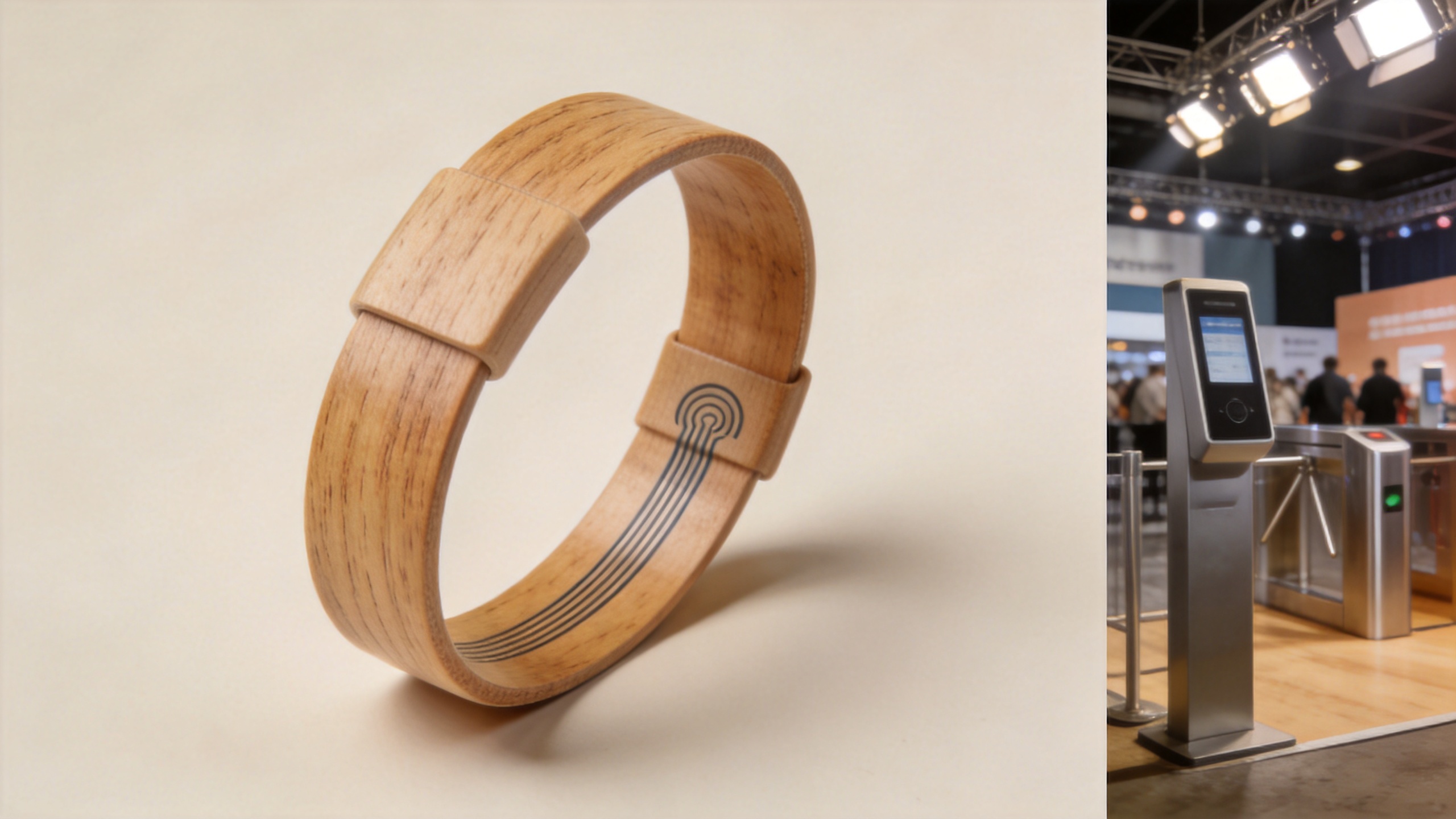
A rfid wood wristband can give an event, resort, or membership program a warmer visual identity than a conventional plastic credential. But the sustainable look is only half of the decision. The other half is whether the finished band identifies people consistently at the reader. As an RFID systems engineer, I would start with the operating environment, chip protocol, antenna assembly, and encoding workflow—not with the wood finish alone.
The practical answer is straightforward: a wood element can support an environmental concept when it is specified honestly and paired with a correctly designed RFID inlay. A reliable rfid wood wristband is not defined by a single material. It is a system made of a chip, antenna, protective construction, attachment method, artwork, and the reader infrastructure already in use.
Start by separating the environmental concept from the identification system
Wood, bamboo, or a timber-style slider may reduce reliance on a conventional all-plastic visual format, but it does not automatically make the entire credential low-impact. The strap, adhesive, coating, RFID inlay, packaging, transport, and end-of-life route all matter. That distinction is worth making before marketing an rfid wood wristband as “eco-friendly.” Ask a supplier what the visible wood component is, how it is finished, and which other materials remain in the assembly.
This is not a reason to reject the concept. It is a reason to make a precise claim. For a resort check-in program, a natural wood face may better match the guest experience than a glossy PVC tag. For a festival, a wood slider paired with a fabric strap can create a reusable-looking keepsake. In either case, the environmental message should describe the verified material choices rather than promise that a multi-component RFID product has no environmental impact.
Why a rfid wood wristband can still read reliably
RFID identification performance comes primarily from matching the chip and antenna to the reader system and the intended use. Many access-control and event applications use high-frequency technology at 13.56 MHz, while other installations use LF or UHF. Those families are not interchangeable. Before production, confirm the exact reader protocol, chip family, memory or encoding requirement, and expected read interaction. A beautiful wooden wristband carrying the wrong chip is still the wrong credential.
The antenna is equally important. It is the part of the tag assembly that communicates with the reader, so its geometry, placement, and protection influence the finished behavior. A wood cover can be compatible with the system, but the manufacturer should validate the complete assembly rather than assume the material is irrelevant. Thickness, moisture exposure, metal ornaments nearby, the way the inlay is bonded, and the position of the wearer’s body can all change real-world consistency.
In other words, a rfid wood wristband should be sampled as a finished unit. Testing a bare chip or an artwork proof does not confirm the final read experience.
Use a performance-first specification checklist
The most common purchasing mistake is to approve appearance first and discover compatibility problems after delivery. A better sequence is to turn the identification task into a short specification brief:
- Reader and protocol: identify the installed reader model, frequency family, and credential standard. Do not assume NFC, HF RFID, LF, and UHF solve the same task.
- Credential action: define whether users tap at a door, present a band at a hotel reader, pass a gate, or support a cashless workflow. The user motion affects the acceptable reading behavior.
- Chip and encoding: document the required chip type, UID handling, sector or data format, and who verifies encoded samples.
- Inlay location: confirm where the antenna sits relative to the wood component, strap, clasp, and wearer’s wrist.
- Environment: specify rain, splash exposure, sweat, sunscreen, repeated use, and cleaning conditions. A dry indoor conference has different needs from a multi-day poolside resort program.
- Security and replacement: decide whether the band needs a one-time closure, visual serialisation, or a process for lost credentials.
That checklist keeps the environmental concept connected to deployment reality. If your event is fully indoors and uses a short tap interaction, a more decorative construction may be workable. If you need high-throughput entry in wet outdoor conditions, request sample testing under those conditions before approving the rfid wood wristband design.
Design the wood component around the RFID inlay
A useful design principle is to let the wood component carry the visual and tactile role while the inlay is engineered for the RF job. The wood may be a face, slider, lock, or card-like element; the antenna can be housed or laminated where its performance can be checked. Avoid adding untested metal decorations or changing the inlay location late in the artwork process. Those choices can look minor on a proof but matter once a wristband reaches a reader.
Material choice is application-specific. Wood can communicate a natural, premium, or destination-led concept, while a protected RFID construction addresses the identification task. Neither goal has to cancel the other. The constraint is that the finished assembly must be qualified as one item, with the selected chip and reader—not treated as a generic wooden accessory with an RFID label added afterward.
Build verification into the order, not just the launch day
Pre-encoded wristbands can reduce on-site work, but only if the encoding instructions are unambiguous. Send a written data specification and use a small pilot batch. Then test representative bands with the actual reader, software workflow, and user motion expected at the venue. Include samples from different positions in the batch and inspect the wood finish, strap attachment, and inlay alignment at the same time.
Here is the simple acceptance sequence I recommend:
- Approve a physical construction sample, not only a digital rendering.
- Verify chip compatibility and encoded data with the live reader environment.
- Test repeated reads by several users, including the wrist orientations likely at the gate.
- Expose samples to the expected moisture and handling conditions where appropriate.
- Freeze the approved chip, inlay placement, wood finish, and assembly method before mass production.
- Keep a receiving check that compares the delivered band against the approved sample and encoding file.
This process is particularly important for an eco friendly programmable rfid bracelet concept because “programmable” should mean the credential is configured for a defined system, not merely that a chip exists inside the product.
When is a rfid wood wristband the right choice?
Choose a rfid wood wristband when the experience benefits from a natural-looking, branded credential and your team can validate the complete RFID assembly. It can suit boutique hospitality, beach clubs, destination events, memberships, and festivals where presentation is part of the value. It may be less suitable when the project requires an unproven long-range behavior, extreme water exposure without a validated protective construction, or a last-minute chip decision.
A strong result comes from treating sustainability and identification as two linked requirements. Specify the environmental claim with care, choose the chip for the existing reader, protect and position the antenna thoughtfully, and verify the finished band before production. With that discipline, an rfid wood wristband can deliver a more considered material story without sacrificing the dependable identification that operations teams need.