EN
 AR
 CS
 DA
 NL
 FI
 FR
 DE
 EL
 HI
 IT
 JA
 KO
 NO
 PL
 PT
 RU
 ES
 SV
 ID
 SK
 SL
 ET
 TH
 TR
 MS
 KA
 UR
 BN
 MN

How RFID Access Control Wristbands Block Unauthorized Personnel Entering Restricted Venue Zones
At a busy venue, a credential is useful only when it produces a clear decision at the point of entry. RFID access control wristbands turn a colored band into a live permission check: a reader identifies the credential, the access-control system compares it with the zone rule, and staff receive an allow or deny signal. That sequence gives event teams a consistent way to protect backstage rooms, production corridors, VIP lounges, loading areas, staff offices, and other restricted venue zones without manually reviewing every ticket.
As an RFID systems engineer, I would frame the issue carefully. RFID access control wristbands do not create security by themselves. Their value comes from the complete setup: the right chip and reader compatibility, a unique credential record, accurate zone permissions, a transfer-resistant band design, and a response process when a scan is denied. When those parts agree, the wristband becomes a practical first line of defense rather than a decorative pass.
The access decision happens at the zone, not at registration
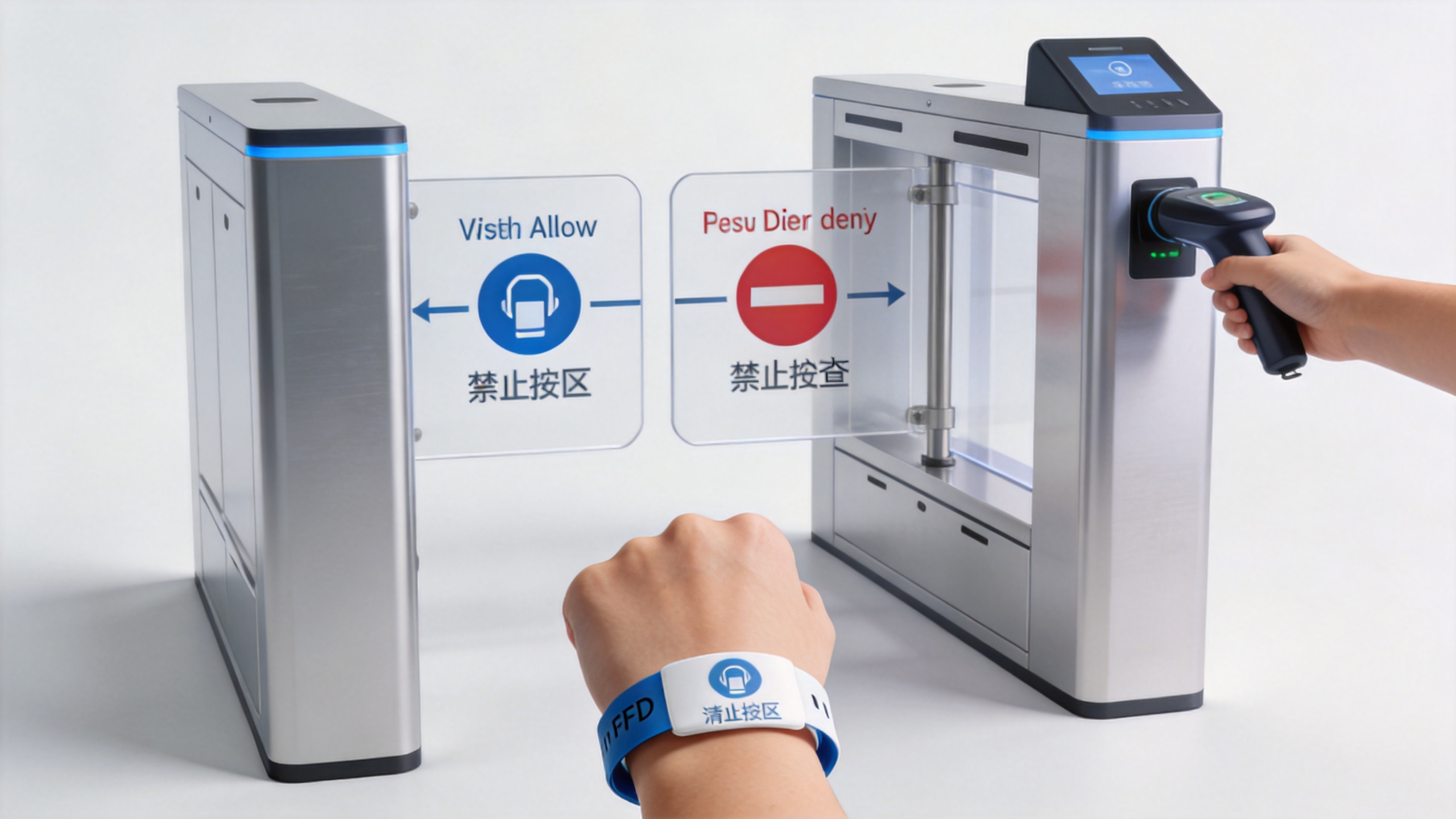
A guest may be legitimately registered for an event and still be unauthorized for a particular area. That is why RFID access control wristbands should be connected to a permission model rather than treated as a single “entry approved” flag. A credential can be assigned to a role such as attendee, vendor, stage crew, security, speaker, or VIP. The system can then map that role to individual doors, turnstiles, checkpoints, dates, and operating hours.
At each reader, the workflow is simple but important:
- The reader detects the credential identifier carried by the wristband.
- The controller checks whether that credential is active and whether it has permission for the requested zone at that time.
- The reader presents a clear allow or deny response for the user and checkpoint staff.
- The system records the event so operations can investigate repeated denials, deactivate lost bands, or correct a permission assignment.
This is the distinction that makes RFID access control wristbands useful in multi-zone venues. One band can allow a technician into a production route while denying access to a cash office or artist dressing area. The person is not judged by appearance or a staff member’s memory; the same rule is applied at every configured checkpoint.
What actually blocks unauthorized entry
1. A unique active credential
Each issued band should point to one active credential record. If a band is lost, returned, or reported stolen, staff need a defined way to deactivate that record promptly. With RFID access control wristbands, the physical band is only the carrier; the authorization status lives in the system. Deactivation matters because a band that still scans as active may continue to pass a reader even after its holder has changed.
2. Zone-specific permissions
Assigning everyone the same access level undermines the point of a restricted zone. Well-planned RFID access control wristbands support least-privilege decisions: give each person only the access needed for their role, then review exceptions before doors open. A temporary contractor may need a loading dock for a two-hour window, while a venue manager needs broader access throughout the day. Time windows reduce the exposure created by credentials that remain valid longer than the job requires.
3. A wristband designed to reveal or deter transfer
Access rules can be defeated when one authorized person passes a reusable credential to another. This is where the physical construction matters. A single-use, tamper-evident clasp can make removal or reassignment more visible than a loose, reusable band. Serial printing, zone colors, and staff visual checks add another layer. RFID access control wristbands are most effective when the electronic scan and the visible credential tell the same story; neither should be the only control for a high-consequence area.
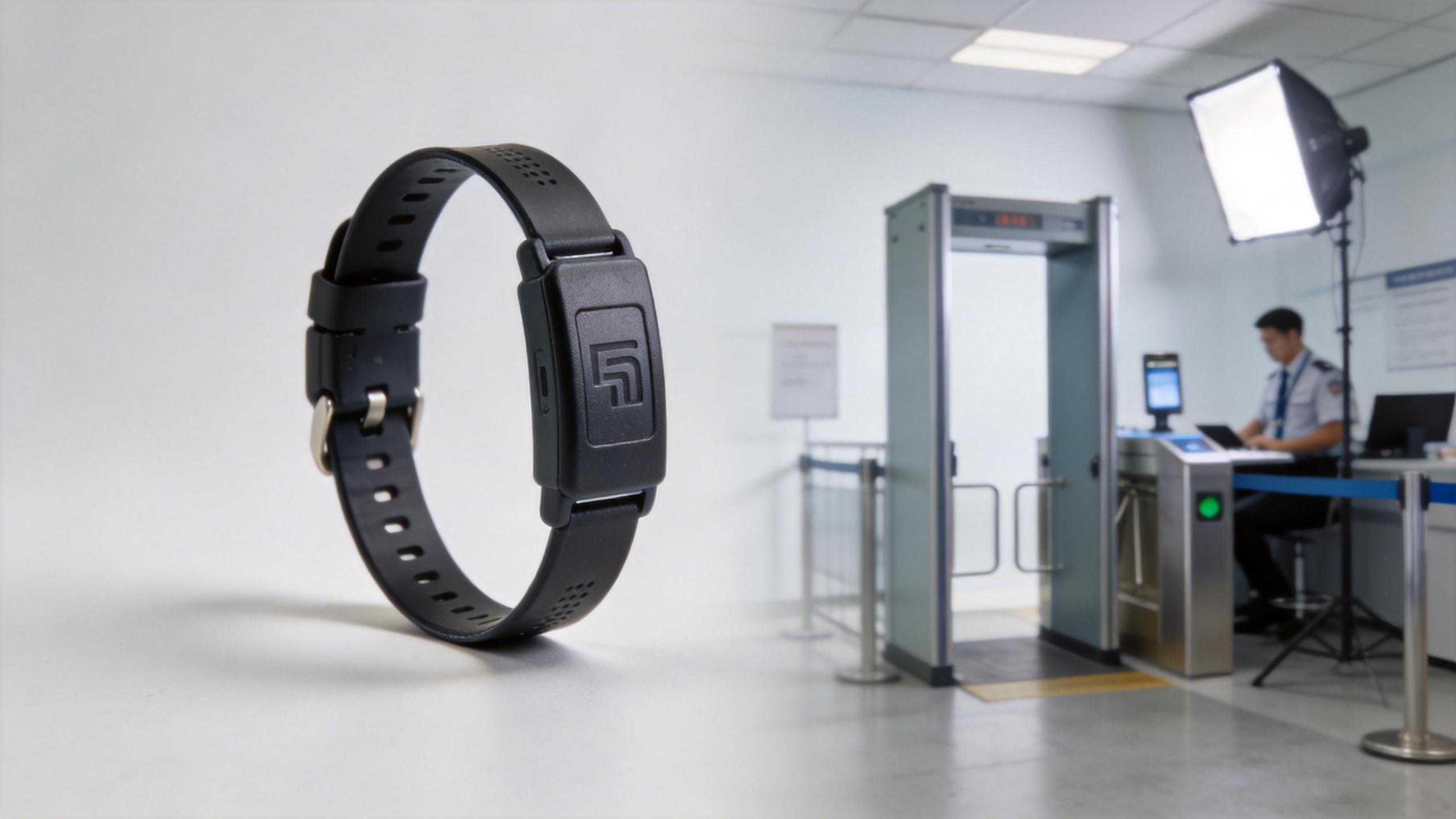
Before comparing styles, it is worth asking whether the requirement is genuine transfer resistance or only a visible indication that a band has been disturbed. Those are not the same thing. A venue should match clasp choice to the risk of the zone, wearer comfort, duration of use, and the procedure for legitimate replacements.
4. Reader and chip compatibility confirmed before issue
A denial cannot protect a door if the reader does not reliably read the credential. RFID access control wristbands must use a chip technology and encoding approach that the existing reader infrastructure supports. The supplier, integrator, and venue team should confirm frequency, credential format, reader behavior, and any write-protection or encryption requirements before production is committed. A pre-production test with the actual reader is more useful than assuming that two products described as “RFID” will interoperate.
NIST’s guidance on securing RFID systems is a useful reminder of the larger principle: RFID deployments require system-level security considerations, not just a physical tag. In practice, that means protecting administrative access, controlling who can issue or edit credentials, and checking how the system handles offline readers and manual overrides.
Build a checkpoint workflow that staff can use under pressure
Even strong RFID access control wristbands need an operational playbook. A red or denied indicator should trigger a predictable response: pause entry, confirm the person’s identity or assignment through an approved channel, route them to credential support if appropriate, and avoid explaining sensitive zone rules in a public queue. Security staff should know who can approve an override and how that decision is logged.
One practical detail that buyers sometimes overlook is the clasp mechanism. If staff issue bands that are too loose, easy to exchange, or uncomfortable enough that people remove them, the access design will degrade quickly. Test the band on real wearers and real checkpoints. Consider crowds, gloves, rain, low light, and the pace of a shift change—not only a tabletop demonstration.
Use layered controls for higher-risk spaces
For a general admission gate, RFID access control wristbands may be the primary credential. For an area with heightened safety, privacy, or financial risk, pair them with another control. That can include a staffed checkpoint, photo verification, a PIN, a door contact alarm, camera coverage, or a log review process. Layering does not mean RFID has failed. It simply matches the control strength to the consequence of unauthorized entry.
It also helps to separate access levels visually. A color-zone plan can help personnel notice an obvious mismatch before a scan, while the system still makes the final authorization decision. Visual design should support the workflow, not replace it. A copied color is not a valid credential when RFID access control wristbands are correctly configured to check a unique active record.
Questions to ask an RFID wristband supplier
When evaluating an RFID wristband supplier, ask for a technical conversation before discussing artwork alone. Confirm which chip options are compatible with the venue’s readers, whether bands can be delivered pre-encoded from an approved data file, how unique identifiers are documented, and how clasp and print choices support zone operations. Ask for a sample or pilot run so the team can test scan consistency and physical handling in the actual environment.
A capable RFID wristband supplier should help clarify the specification, but the venue must retain ownership of access policy and credential issuance approvals. No supplier can compensate for duplicated permissions, unsecured administrator accounts, or a missing lost-band process.
A practical pre-event checklist
- Define each restricted zone, the roles allowed inside it, and the hours those permissions apply.
- Confirm reader, chip, and credential-format compatibility before full production.
- Choose a band and clasp that match the transfer and wear risks of the event.
- Create a documented issue, replacement, deactivation, and escalation workflow.
- Test RFID access control wristbands at every real checkpoint, including denial and override scenarios.
- Brief security, guest services, and zone managers on the same response signals and escalation path.
Make the wristband part of a controlled access system
RFID access control wristbands are most effective when they combine physical credential handling with clear, current authorization data. They can speed legitimate movement while making unauthorized access easier to detect and deny at the boundary that matters. Start with zone rules, validate compatibility, select a transfer-aware band design, and rehearse the human response to a failed scan. That is how a wearable credential becomes a dependable part of venue security.